Intrapersonal Learning Style: Examples, Characteristics, and Study Strategies
An intrapersonal learning style describes a preference for learning through self-reflection, private thinking, personal goals, and independent study. It does not mean a learner must avoid people, learn alone forever, or fit one fixed label. It simply points to a pattern: some students understand material best after they have had time to connect it with their own thoughts, motives, questions, and experiences. If you are comparing different learning preferences, a quick learning style self-check can give you a practical starting point for reflection, especially when you treat the result as guidance rather than a permanent category.

What the Intrapersonal Learning Style Means
Intrapersonal learning is closely tied to self-awareness. A learner with this preference often wants to ask, "What do I already know?", "Why does this matter to me?", and "How can I use this in my own life?" before moving into discussion or practice. In that sense, intrapersonal learning style characteristics are less about a subject area and more about the learner's process.
Common traits include comfort with independent reading, private notes, journaling, goal-setting, and self-paced review. These learners may enjoy planning their own study schedule, tracking progress, and thinking through ideas before speaking. They may also need quiet time after a class, video, or group activity so the material can settle.
This preference can overlap with other learning styles. A person might be intrapersonal and visual if diagrams help them reflect, intrapersonal and linguistic if writing clarifies their thinking, or intrapersonal and logical if they like structured reasoning. The key is not the label. The key is noticing which learning methods help the learner turn information into understanding.
Intrapersonal Learning Style Examples
Intrapersonal learning style examples are easiest to see in ordinary study habits. A student might keep a private learning journal after each lesson, write a one-page reflection on what confused them, or set a personal target before beginning a unit. Another learner might pause a recorded lecture to summarize the idea in their own words before continuing.
Five simple examples of intrapersonal learning include:
- Writing a private study reflection after class
- Setting weekly goals before starting a project
- Using self-quizzes to track progress
- Connecting a new concept to personal values or long-term plans
- Reviewing mistakes quietly before asking for feedback
In the classroom, this can look like a learner who needs a minute to think before answering aloud. It can also look like a student who performs better when they receive the rubric early, can plan their work independently, and has space to revise after self-assessment. At home, it may look like a learner who prefers a checklist, a quiet desk, and a clear reason for why the task matters.
It is important not to confuse intrapersonal with interpersonal. An interpersonal learner often gains energy and insight from conversation, group problem-solving, peer teaching, and social feedback. An intrapersonal learner may still enjoy people, but they often need private processing time before collaborative work becomes useful.
Strengths and Watchouts for Intrapersonal Learners
The strengths of an intrapersonal learner often show up in planning and self-management. These learners may be good at noticing their habits, setting meaningful goals, and adjusting their approach when something is not working. They can become thoughtful independent readers, careful writers, strong researchers, or reflective problem-solvers.
That said, every learning preference has possible blind spots. A learner who relies only on private study may wait too long to ask for help. They may overthink a task, revise endlessly, or assume they should solve every problem alone. In group settings, they may appear quiet even when they are deeply engaged.
For educators, parents, and learners, the goal is balance. Independent study can be powerful, but feedback still matters. A student can prepare privately, then share one idea, ask a targeted question, or compare strategies with someone else.

Study Strategies That Work Well
The best strategies for the intrapersonal learning style turn reflection into action. A learner should not only think about learning; they should build a repeatable process that helps them plan, study, check progress, and adjust.
One useful routine is the "before, during, after" reflection:
| Stage | Question to Ask | Simple Action |
|---|---|---|
| Before studying | What am I trying to understand? | Write one clear goal |
| During studying | Where am I confused? | Mark the exact step or idea |
| After studying | What changed in my understanding? | Write a three-sentence recap |
Journaling is another strong method. It does not need to be long. A learner can write three bullets: what made sense, what felt difficult, and what to try next. Over time, those notes reveal patterns in attention, motivation, and comprehension.
Self-quizzing also works well because it gives private feedback. Instead of rereading notes passively, learners can close the book, answer a few questions, then check what they missed. This pairs nicely with logical learning style habits, especially when the subject involves categories, formulas, or cause-and-effect reasoning.
For a linguistic learning style, reflective writing can become the main study tool. The learner might rewrite a concept as a short explanation, teach it to an imaginary audience, or create a personal glossary. For a kinesthetic learning style, reflection can follow hands-on practice: do the lab, solve the problem, build the model, then write what the action revealed.
Learners who are unsure how these preferences combine can use a learning preference quiz as a low-pressure way to compare patterns, then test small strategy changes in real study sessions.
How It Fits With Other Learning Styles
Searches about intrapersonal learning often appear beside naturalistic learning style, logical learning style, linguistic learning style, interpersonal learner, logical-mathematical learning style, and kinesthetic learning style. That is useful because real learners rarely fit only one category.
A naturalistic learner may understand best through patterns in nature, classification, or real-world observation. If that learner is also intrapersonal, they might prefer quiet field notes, private observation logs, or independent research projects. A logical-mathematical learner may enjoy systems, numbers, rules, and evidence. If they are also intrapersonal, they may use private problem logs and structured self-checks.
An interpersonal learner may want to discuss ideas early, while an intrapersonal learner may want to think first and speak second. Neither approach is better. They simply use different routes into understanding. A useful classroom can make room for both by offering quiet preparation, partner exchange, group synthesis, and individual follow-up.
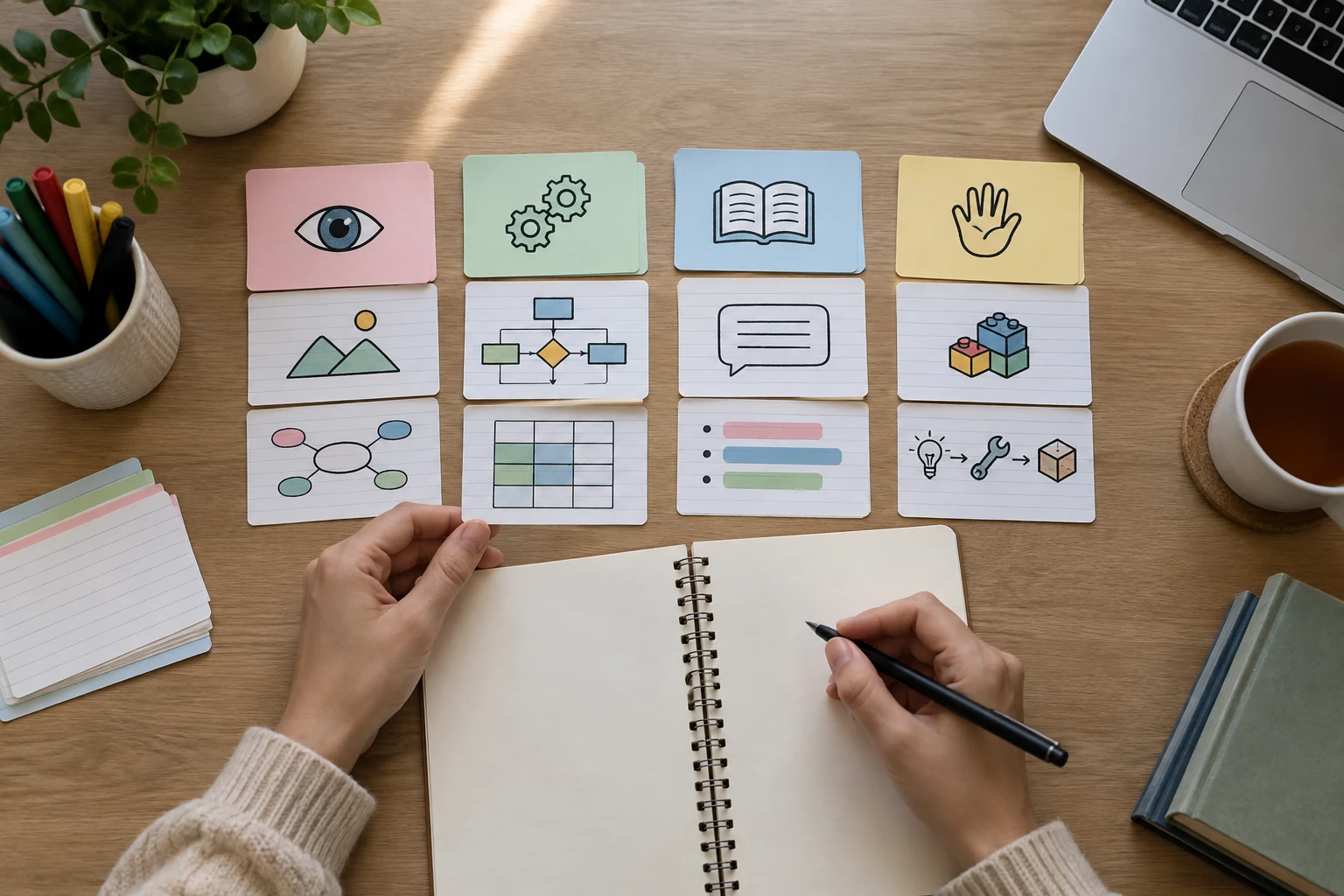
Visual, auditory, reading-writing, and kinesthetic preferences can also blend with intrapersonal habits. A visual intrapersonal learner might create mind maps alone. An auditory intrapersonal learner might record a voice memo after class. A hands on learner might prefer to practice first, then reflect privately on what the activity taught them.
Intrapersonal Learning in the Classroom
Intrapersonal learning style in the classroom works best when reflection is built into the lesson design. Teachers do not need to separate students by type. Instead, they can add short reflective moments that help many learner types at once.
Practical classroom supports include:
- Giving quiet think time before discussion
- Offering reflection prompts after new concepts
- Letting students set one personal goal for a unit
- Using exit tickets that ask what strategy helped today
- Providing rubrics early so students can self-monitor
- Pairing independent planning with later peer feedback
These supports also help prevent a common misunderstanding. Intrapersonal learning is not the same as isolation. A learner can benefit from private reflection and still need conversation, examples, coaching, and community. The strongest learning plan often moves between independent work and selective collaboration.
Parents can use the same idea at home. Instead of asking only, "Did you finish?", ask, "What part felt clear?", "What part still feels unfinished?", or "What would you try differently next time?" These questions respect the learner's inner process while still inviting support.

Common Myths About Intrapersonal Intelligence
Intrapersonal intelligence comes from the broader idea that people can show strengths in different forms of thinking, including self-understanding. In psychology and education conversations, it is often discussed as the ability to notice one's own feelings, motives, goals, and patterns.
One myth is that intrapersonal intelligence is rare. Strong self-awareness may feel uncommon, but reflective habits can be developed. Learners can practice noticing what helps them focus, what frustrates them, and which study methods lead to better recall.
Another myth is that one learner type has the highest IQ. Learning style labels do not measure intelligence, and they should not be used to rank students. A visual learner, auditory learner, interpersonal learner, or intrapersonal learner can be strong in many different ways. Study preferences describe how someone may like to approach learning; they do not determine ability.
A third myth is that the "7 learning styles" or any other list gives a complete map of a person. Lists can be useful for reflection, but they simplify real learning. A person may use different methods for math, language, music, sports, and online courses. The most practical question is not "Which box am I in?" It is "Which methods help me learn this task better right now?"
Turn Reflection Into a Practical Study Plan
If the intrapersonal learning style sounds familiar, use it as a starting point for a small experiment. Choose one subject, one week, and one reflective routine. For example, set a goal before each study session, write a short recap afterward, and review the notes at the end of the week. Look for evidence: Did you remember more? Did you avoid confusion earlier? Did you ask better questions?
You can also build a simple blended plan. Use visual diagrams for complex ideas, logical outlines for systems, linguistic summaries for definitions, and kinesthetic practice for skills that require action. Then add intrapersonal reflection around those methods so you understand which ones are actually helping.
Learning preferences are most useful when they lead to better choices, not tighter labels. To compare your current habits with other learner types, you can explore a reflective quiz experience and use the result as one input for planning. Keep what helps, revise what does not, and remember that effective learners can grow beyond their first preference.
FAQ
What are 5 examples of intrapersonal?
Five examples are private journaling, setting personal learning goals, using self-quizzes, reflecting on mistakes before asking for feedback, and connecting new material to personal values or future plans. These habits show self-awareness and independent processing.
What are intrapersonal learning style characteristics?
Common characteristics include reflection, independence, self-motivation, goal-setting, comfort with quiet study, and interest in personal meaning. Some learners also prefer to think before speaking, plan before acting, and review progress privately.
What type of learner has the highest IQ?
No learning style has the highest IQ. Learning styles describe preferences for approaching information, not intelligence. A learner's growth depends on many factors, including practice, feedback, instruction quality, motivation, health, support, and opportunity.
Is intrapersonal intelligence rare?
It is better to think of intrapersonal intelligence as a skill set that varies by person and can be strengthened. Some learners naturally reflect often, while others develop self-awareness through journaling, coaching, feedback, and intentional review.
What are the 7 types of learning styles?
One common seven-style list includes visual, auditory, verbal or linguistic, physical or kinesthetic, logical, social or interpersonal, and solitary or intrapersonal. Other models use different categories, so the list should be treated as a reflection tool rather than a fixed rule.
How can teachers support intrapersonal learners?
Teachers can provide quiet think time, clear goals, reflection prompts, rubrics, self-assessment checklists, and chances to prepare before group discussion. The aim is to support reflection while still giving learners access to feedback and collaboration.
Can an intrapersonal learner also be interpersonal?
Yes. A learner may enjoy both private reflection and meaningful discussion. They might prefer to think alone first, then share in a small group, ask targeted questions, or collaborate after they have formed an initial point of view.