Learning Style Hacks for Busy Professionals
In today's fast-paced corporate world, time is your most valuable asset. Yet, many high-achieving professionals find themselves stuck in a cycle of "mandatory training" that yields almost zero retention. You endure hours of slide decks. Yet after monotonous webinars, 90% of the content vanishes overnight. This is the Corporate Learning Trap.
Why are you wasting your time on methods that don't stick? The truth is that most professional development programs are designed for the "average" person, but your brain isn't average. It has specific preferences for how it absorbs, processes, and retains new information. By understanding your unique profile, you can cut your study time in half and actually apply what you learn to your career.
If you want to stop guessing and start mastering new skills, the first step is to take the test to see where you stand. Once you know your primary style, you can stop fighting your biology and start hacking your productivity.
Adult Learning Style Strategies for Career Growth
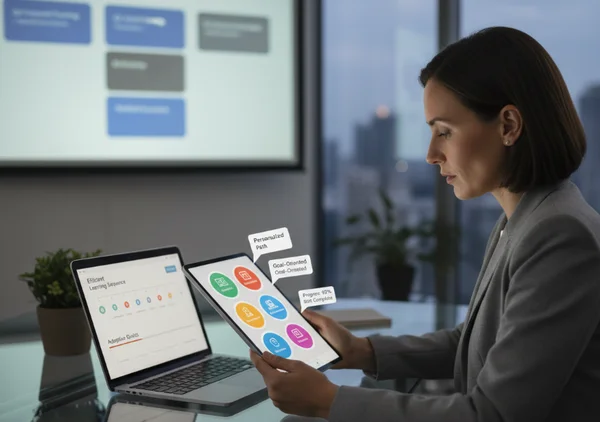
As we transition from traditional schooling into the professional world, our learning methods must evolve. In a classroom, you are often forced to follow a teacher's specific method. In the workplace, you have the autonomy to choose how you consume information. Applying specific adult learning style strategies is not just about personal preference. It is about maximizing your return on investment (ROI) for every minute spent on professional development.
Are You a Visual, Auditory, or Kinesthetic Professional?
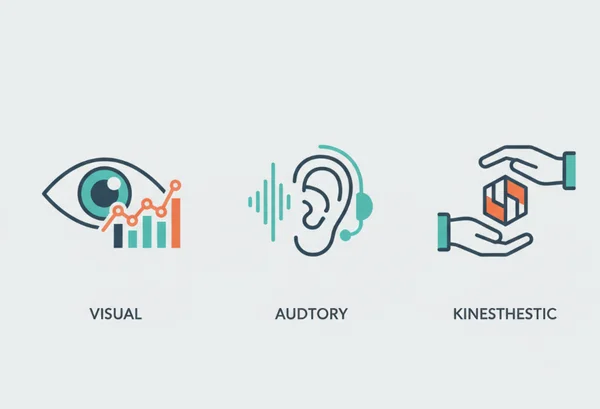
In the workplace, these styles manifest in very specific ways. A Visual professional often prefers seeing a project roadmap on a Kanban board. They might rely on detailed reports or charts to grasp complex data. An Auditory professional might prefer a quick sync-up call. They often enjoy listening to an industry podcast during a commute or talking through a problem with a mentor.
Meanwhile, a Kinesthetic professional learns best by "doing." These are the individuals who jump into new software and click through features rather than reading the manual. They need a hands-on experience to make the knowledge real. Most of us are a mix of these styles, but we usually have one dominant preference.
Identifying this preference allows you to curate your environment. For example, if you are a visual learner, stop feeling guilty about skipping audio-only meeting notes. Instead, ask for the slide deck or a screen recording. You can identify your style today to see which category fits you best.
Why Generic Training Fails High-Performers
Generic corporate training is designed to be "inclusive" by covering every base, but it often ends up being shallow. For a high-performer, this inefficiency is frustrating. Kinesthetic learners forced into three-hour lectures? Their brains disengage instantly. They aren't "bad at learning." They are simply being fed information in a format their brain isn't optimized to digest.
Personalization is the key to high performance. When you align your learning habits with your cognitive strengths, you reduce the mental friction of acquiring new skills. This leads to faster mastery, higher confidence, and a more impressive professional portfolio. Instead of struggling through a generic course, look for materials that match your specific needs.
Top Professional Development Tips by Style
Once you have identified your primary learning preference, you can begin implementing targeted professional development tips. These hacks align with your brain's natural tendencies. This section breaks down practical strategies for each of the three major styles within the VARK model.
Visual Learner Hacks: Dashboards and Diagrams
Visual learners thrive on spatial awareness and color. If this is you, your greatest tool is the "translation" of abstract data into something you can see.
- Use Mind Mapping: Instead of taking linear notes during a board meeting, use a mind map. Draw connections between ideas using lines and colors. This helps your brain see the "big picture" and improves memory recall.
- Leverage Dashboards: If you are learning a new business process, create a visual dashboard or a flowchart. Tools like Lucidchart can help you visualize the workflow, making it easier to spot bottlenecks.
- Color-Code Everything: Use different colors for different categories of information in your digital notes. This allows your brain to categorize information at a glance, saving time during reviews.
If you aren't sure if this describes you, you should start your test to confirm your visual leaning.

Auditory Learning: Leveraging Podcasts and Voice Notes
Auditory learners process information best through sound and verbal repetition. If you are an auditory professional, you should focus on the "rhythm" of information.
- Speed Up the Audio: Many auditory learners find that listening to videos at 1.5x speed keeps their brain more engaged. The faster pace prevents the mind from wandering during slow-paced lectures.
- Dictate Your Thoughts: Instead of typing out a long strategy document, try using a voice-to-text tool. Speaking your ideas aloud helps you organize them more effectively than staring at a blank screen.
- The "Teaching" Method: Explain what you just learned to a colleague. If no one is available, explain it to yourself in the mirror. Hearing the words reinforces the neural pathways associated with that knowledge.
Kinesthetic Techniques: Learning by Doing
Kinesthetic learners are often the most underserved in the corporate world because work is so often sedentary. However, you can still apply movement to your learning.
- The "Sandbox" Approach: If you are learning new software, skip the tutorial. Open a demo version and try to build something. You will learn more from your mistakes in ten minutes than from an hour of watching someone else.
- Micro-Movements: Use a standing desk or a fidget tool during long seminars. While it sounds simple, keeping your body slightly active helps your brain stay focused on the content.
- Role-Playing: If you are practicing sales or leadership skills, find a partner and act out the scenarios. The physical act of speaking and reacting helps the "muscle memory" of the skill take root.
Efficient Continuing Education Techniques for the Time-Poor
For the busy professional, "continuing education" often feels like another chore on an already long to-do list. To stay competitive, you must find ways to integrate learning into your existing routine. Using smart continuing education techniques allows you to stay ahead of industry trends without burning out.
Adapting Online Courses to Fit Your VAK Profile
Most online platforms like Coursera or LinkedIn Learning offer multiple ways to consume their content. Don't feel obligated to follow their "recommended" path.
If you are Visual, download the transcript or the slides first. Skim the visual data before watching the video to build a mental framework. If you are Auditory, listen to the lectures while you exercise or commute. You don't always need to see the instructor to learn the material. If you are Kinesthetic, keep a notepad handy. "Live-map" the concepts as they are mentioned. Alternatively, pause the video every five minutes to apply one thing you just heard.
By modifying how you interact with these platforms, you turn a passive experience into an active one. You can see your results and get a personalized roadmap on how to adjust these courses to your specific profile.
Accelerating Skill Mastery with AI Analysis
We are living in an era where AI can serve as a personal tutor. For professionals, AI analysis is the ultimate shortcut. Instead of reading a 300-page industry report, use AI to summarize the key points into a format that suits your style.
At LearningStyleQuiz.org, we offer an optional AI-driven deep report. This tool takes your test results and turns them into a specific "Success Roadmap." It analyzes your background and your goals to tell you exactly which learning tools will work best for your career path. In 2024, decoding your cognitive manual via AI is the ultimate shortcut to professional mastery.

Stop Guessing, Start Advancing
Imagine cutting your learning time while boosting retention—just by aligning with your brain's natural wiring. Mastering your career doesn't require more hours; it requires better strategy. By identifying whether you are a visual, auditory, or kinesthetic learner, you can stop fighting against your natural inclinations. You can turn a boring meeting into a visual map, a long commute into an auditory classroom, or a complex task into a kinesthetic experiment.
The most successful people in any industry are those who know how they work best. They ditch one-size-fits-all training and leverage cognitive shortcuts tailored to their strengths. They use their unique abilities to outpace the competition. Your first step toward this level of efficiency is simple and takes only a few minutes.
Don't let another week of generic learning go by. Visit our homepage and use the tool to discover your profile. It is free, fast, and requires no registration. Once you have your results, you can start applying these hacks immediately to see real results in your professional life.
FAQ Section
How do you identify your learning style as an adult?
Identifying your style as an adult is unique because your habits shift toward your professional needs. The most effective way is to use a validated tool like our learning style quiz. Look for patterns in your daily life. Do you remember things better when you see them, hear them, or do them? Our test uses the JKAV™ model to give you a clear percentage breakdown of your preferences.
What is the most effective learning style for workplace training?
There is no single "best" style. However, the most effective approach for workplace training is usually multimodal. This means using your primary style while supporting it with another. For example, you might watch a video (Visual) and then immediately try the task yourself (Kinesthetic). This is one of the fastest ways to ensure long-term retention.
How can I improve my study habits with a full-time job?
The key is "micro-learning." When you have a full-time job, you rarely have four-hour blocks to study. Instead, break your learning into 15-minute segments that match your style. If you are auditory, listen to a short podcast during lunch. If you are visual, review a flowchart of a new process before you start your workday. You can get personalized insights on our site to help you build a study schedule that actually fits into a busy 9-to-5 routine.