Learning Style Quiz: Distinguishing Learning Preferences from Disabilities
Are you a parent or educator watching a bright child struggle with their schoolwork? This common, concerning situation often leads to a critical question: is this a simple mismatch in teaching methods, or could it be something more? Understanding the crucial difference between learning styles vs learning disabilities is the first step toward providing the right support. How do you know if a child's struggle is a simple preference or something more? This guide clarifies the difference between a child's learning preference and a genuine neurodevelopmental condition.
Navigating this path can feel overwhelming, but you're not alone. By exploring these concepts, you can better advocate for your child or student and empower them for success. A great starting point is understanding their unique learning preferences. You can discover your style with a simple assessment.
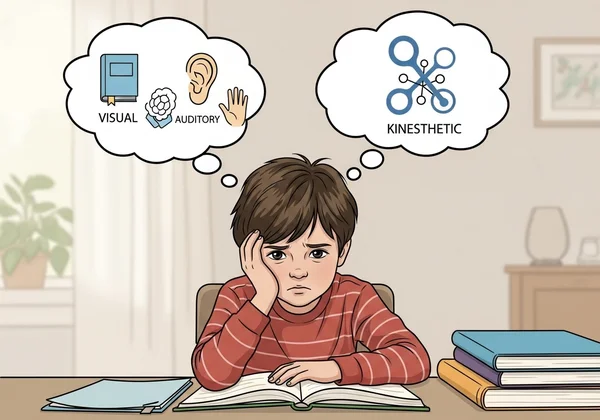
What Are Learning Styles? Understanding Preferences, Not Deficits
A learning style is a preference for how someone best absorbs, processes, and retains information. It’s not about intelligence or capability; it’s about the method that makes learning feel most natural and effective. Think of it like being right-handed or left-handed—neither is inherently better, they are just different ways of approaching a task. Recognizing these preferences is a powerful tool for optimizing study habits and classroom instruction. It's about working with the brain's natural inclinations, not against them.
Visual, Auditory, Kinesthetic: Exploring the VAK Model
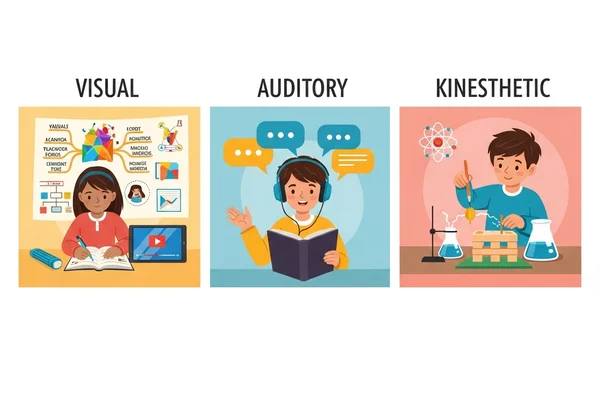
One of the most straightforward and widely recognized frameworks is the VAK model, which categorizes learning preferences into three main types:
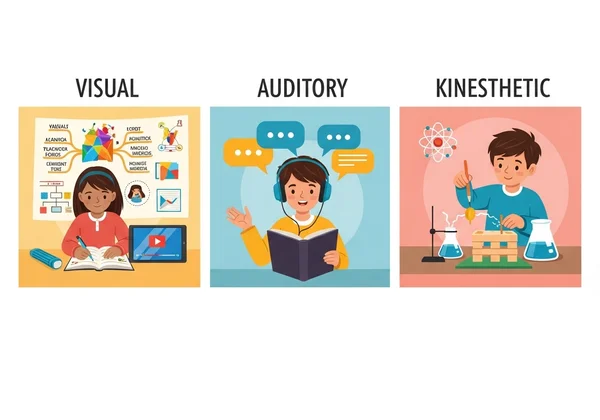
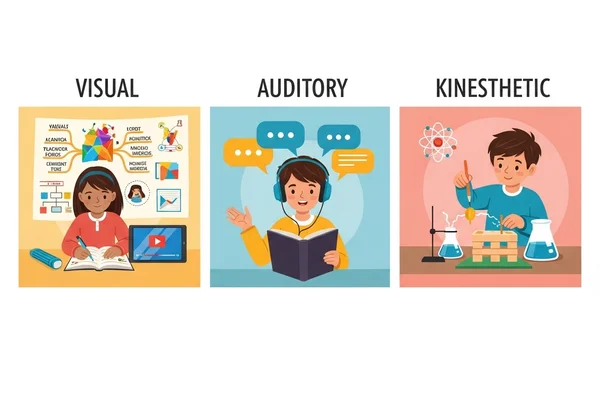
- Visual Learners: These individuals thrive on seeing information. They benefit from charts, diagrams, mind maps, videos, and written instructions. They often remember faces but forget names and prefer to take detailed notes to absorb information.
- Auditory Learners: Sound is key for this group. They learn best by listening to lectures, participating in discussions, and talking through concepts. They might read aloud to themselves or use mnemonic devices based on sound to remember facts.
- Kinesthetic Learners: These are the "doers." They learn best through hands-on experience, movement, and physical interaction with their learning material. Building models, conducting experiments, and role-playing are far more effective for them than sitting through a passive lecture.
Most people are a blend of these styles, but typically have one dominant preference.
How Our Free Learning Style Quiz Identifies Your Child's Preferences
Understanding these preferences is the first step toward unlocking a student's potential. Our platform provides a tool designed for just that. Our free learning style quiz asks a series of questions based on the VAK model to help identify a user's dominant learning style. It's a quick, accessible way to gain valuable self-awareness. This insight can transform a student's approach to studying, helping them choose methods that align with their natural strengths and make learning more efficient and enjoyable.
Defining Learning Disabilities: Beyond Simple Preferences
While a learning style is a preference, a learning disability is a neurological condition affecting how the brain processes information. These are not issues of intelligence or motivation. Individuals with learning disabilities are often very bright but struggle because their brains are wired differently. These conditions are lifelong, and while they can be managed with the right strategies and support, they are fundamentally different from a simple preference for hands-on activities over reading a textbook. This is a critical distinction for providing effective and compassionate study help for struggling students.
Common Challenges: Is ADHD a Learning Disability or a Style?
A frequently asked question is, is ADHD a learning style or a learning disability? While Attention-Deficit/Hyperactivity Disorder (ADHD) is not technically classified as a learning disability, it is considered a related neurodevelopmental disorder under federal law. It significantly impacts executive functions like focus, organization, and impulse control, which are crucial for learning. Therefore, it often co-occurs with learning disabilities like dyslexia or dyscalculia and requires specific management strategies. Confusing its symptoms with a "kinesthetic learning style" can lead to a lack of appropriate support.
Key Characteristics: Processing Differences, Not Just Preference
The hallmark of a learning disability is a persistent and significant difficulty in a specific academic area, despite average or above-average intelligence and adequate instruction. Key characteristics include:
- Processing Deficits: The brain has trouble with specific tasks like decoding words (dyslexia), understanding numerical concepts (dyscalculia), or coordinating written movements (dysgraphia).
- Unexpected Underachievement: A noticeable gap exists between a student's overall potential and their actual performance in one or more subjects.
- Persistence: The challenges don't go away by simply trying a different study method; they require specialized intervention and accommodations.
Learning Styles vs. Learning Disabilities: Making the Critical Distinction
Distinguishing between a style and a disability is a crucial role for any parent or educator. Mislabeling a disability as a style can delay crucial intervention, while overlooking a style preference can lead to unnecessary frustration. The core difference lies in severity and origin: a style is a preference, while a disability is a processing impairment.
Spotting the Signs: When a Struggle is More Than a Style Mismatch
How can you tell the difference? Consider these signs that may point toward a learning disability rather than a simple style mismatch:
- Consistent Difficulty: Trouble with reading, writing, or math that persists over time, regardless of different teaching approaches.
- Trouble with Basic Skills: Difficulty remembering the alphabet, rhyming words, or connecting letters to sounds.
- Poor Coordination: Clumsiness or difficulty with fine motor skills required for writing and drawing.
- Memory and Organization Issues: Trouble following multi-step directions, remembering information, or keeping track of assignments and belongings.
- Emotional Fallout: Intense frustration, anxiety, or avoidance of schoolwork that seems disproportionate to the task.
Why Our Quiz Cannot Diagnose: Clarifying Its Purpose and Limits
We want to be clear: our learning style test is a tool for self-discovery, not for diagnosis. It can offer fantastic insights into how a person prefers to learn, which can inform study habits and teaching strategies. However, it cannot and should not be used to diagnose ADHD, dyslexia, dyscalculia, or any other learning disability. A formal diagnosis can only be made by a qualified professional, such as an educational psychologist, through a comprehensive assessment. Using a preference quiz for diagnosis is like using a personality test to diagnose a medical condition—it's the wrong tool for the job.
Next Steps: A Parent & Educator Guide to Seeking Support
If you suspect a learning disability, taking proactive steps is key. This parent guide learning support section outlines where to begin. Your advocacy can make all the difference, setting a child on a path to thrive.
Initiating the Conversation: Talking to School Staff and Professionals
Your first step is to gather information and open lines of communication.
- Document Your Observations: Keep a log of specific challenges you've noticed, including examples of schoolwork, the time spent on homework, and any emotional responses.
- Schedule a Meeting: Request a conference with the child’s teacher, school counselor, or special education coordinator. Share your concerns calmly and provide your documented examples.
- Ask Questions: Inquire about their observations in the classroom, what interventions have already been tried, and what the school’s process is for evaluating students for learning support services.
Resources for Assessment and Effective Study Help for Struggling Students
If the school's initial interventions aren't sufficient, or if you want a more comprehensive picture, seeking a formal evaluation is the next step.
- School Evaluation: Parents can formally request an evaluation for special education services from their public school district, often at no cost.
- Private Evaluation: You can also seek an assessment from a licensed educational psychologist or neuropsychologist. This can sometimes be a faster process and may provide a more detailed report.
Once a diagnosis is made, a support plan (like an IEP or 504 Plan) can be created with specific accommodations and strategies tailored to the child's needs.
Empowering Every Learner: Your Next Steps
Understanding the difference between learning styles and learning disabilities empowers you to be a more effective advocate. A learning style is a preference that can be accommodated to make learning easier, while a learning disability is a neurological challenge that requires specific, targeted support.
Our quiz is a wonderful tool to begin the conversation about how a person learns best, offering valuable insights that can reduce frustration and build confidence. However, it is a tool for empowerment, not diagnosis. If the signs point to something more than a style mismatch, trust your instincts. Seeking a professional evaluation is a sign of strength and the most loving step you can take. Empower your child or student by first understanding their preferences, and then by seeking expert help when they need it most. Ready to start with the first step? Take the quiz today to explore learning preferences.
Frequently Asked Questions About Learning Challenges
Can a learning style quiz diagnose ADHD, dyslexia, or other learning disabilities?
No, absolutely not. A learning style quiz identifies personal preferences (e.g., visual, auditory, kinesthetic) and is a self-discovery tool. It cannot diagnose learning disabilities like dyslexia or ADHD, which require a comprehensive evaluation by a qualified professional.
What are the fundamental differences between a learning style and a learning disability?
The core difference is preference versus impairment. A learning style is a preference for how one learns. A learning disability is a neurological impairment affecting the brain's ability to process information, causing persistent academic difficulty despite normal intelligence.
When should a parent or educator consider seeking professional help for a student's academic difficulties?
You should consider seeking help if a student's struggles are persistent, if there is a significant gap between their potential and performance, or if the difficulties are causing significant emotional distress or school avoidance. When in doubt, initiating a conversation with the school or a professional is always a good idea.
How can I effectively support my child's learning without confusing styles with disabilities?
Start by exploring their learning preferences to optimize their study environment and methods; you can use a free quiz for this. If challenges persist despite these adjustments, document your observations and speak with their teacher. This approach allows you to support their style while remaining vigilant for signs that may warrant a professional evaluation.
Is a child's struggle with a particular subject always a sign of a learning disability?
Not necessarily. Many factors can cause a student to struggle, including a teaching style mismatch, gaps in foundational knowledge, or lack of interest. However, if the struggle is severe, persistent, and exists even with extra help, it's worth investigating further to rule out an underlying learning disability.