Learning Style Quiz for Kids: A Parent’s Guide to Empowering Learning
Learning Style Quiz for Kids: A Parent's Guide to Empowering Learning
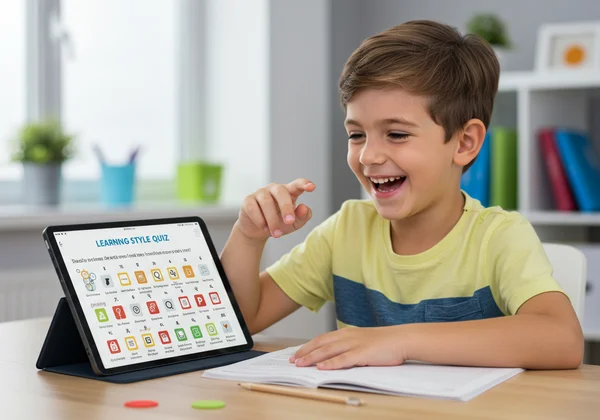
Are you a parent struggling through homework battles, wondering why some study methods work wonders while others fall flat? Discovering your child's unique learning style profile through a quick online quiz can be the key that unlocks their potential, transforming frustration into effective, joyful learning. What kind of learner am I? is a question children often can't articulate, but one you can help them answer. This guide will introduce you to the VAK (Visual, Auditory, Kinesthetic) model and give you powerful, actionable strategies to support your child's academic journey. The first step to understanding is to discover their learning style.
Understanding Your Child's Learning Style
As a parent, you have a front-row seat to your child's development. Recognizing their natural learning preferences is a game-changer. It allows you to tailor homework help, create a supportive environment, and communicate in a way that truly resonates with them. This isn't about labeling; it's about empowering them with tools that really click with how their brain naturally works. This is the core of our parent's guide to learning styles.
What are the VAK Learning Styles for Kids?
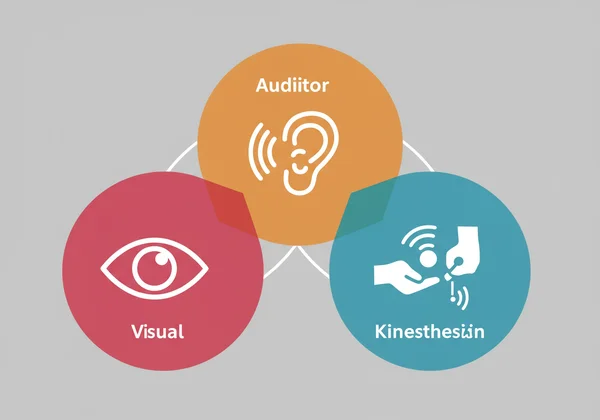
The VAK model is a simple yet effective framework for understanding learning preferences. It categorizes learners into three main types based on their dominant sense for processing information.
- Visual Learners: These children understand and remember things best by seeing them. They are drawn to charts, diagrams, pictures, and written text. They often have a vivid imagination and may recall information as a picture in their minds.
- Auditory Learners: These children learn best through hearing and listening. They thrive on verbal instructions, discussions, and listening to others explain concepts. They might read aloud to themselves or enjoy using rhymes and music to remember facts.
- Kinesthetic Learners: Also known as tactile learners, these children learn by doing, moving, and touching. They need to physically engage with their learning material. They are often active and may find it difficult to sit still for long periods.
How to Identify Your Child's Primary Learning Style
Observing your child in their natural element is the best way to spot clues about their learning preference. Does your child love to draw and doodle, even when listening? They might be a visual learner. Do they remember all the words to a song after hearing it once or enjoy telling detailed stories? You may have an auditory learner. Is your child always fidgeting, eager to build things with their hands, or learns a sport best by jumping in and trying? That's a classic sign of a kinesthetic learner. For a more structured insight, a our learning style quiz for kids can provide a clear profile.
Why Knowing Their Style Makes a Difference at Home
Understanding your child's learning style does more than just help child study; it strengthens your relationship. When you provide support that aligns with their needs, you reduce friction and arguments over homework. It shows your child that you see and understand them. This fosters confidence and encourages them to take ownership of their education, knowing they have the right tools to succeed. The result is a more peaceful home and a happier, more engaged student.
Strategies for Supporting Visual Learners at Home
If your child is a visual learner, their world is made of images, colors, and spatial arrangements. To help them thrive, you need to make their learning environment visually rich and engaging. This approach transforms abstract concepts into something tangible they can see and remember.
Creating a Visually Stimulating Study Environment
A visual learner’s study space should be organized and inspiring. Use colorful folders, labels, and bins to keep materials tidy. A whiteboard or corkboard is a fantastic tool for them to map out ideas, post reminders, and visualize their schedule. Ensure good lighting and minimize visual clutter that isn't related to their studies to help them focus.
Effective Visual Aids for Homework Help
Turn to visual tools to make homework less of a chore.
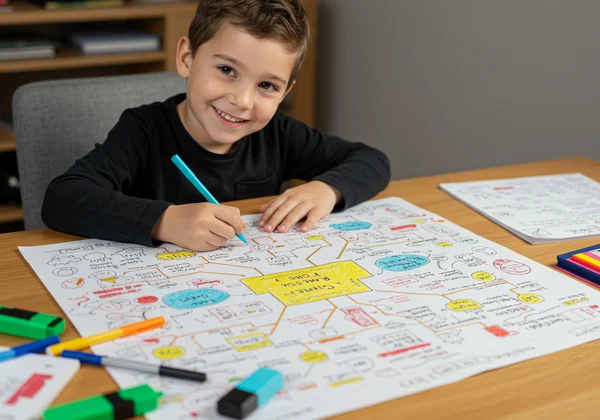
- Mind Maps: Help them brainstorm essays or summarize chapters with colorful mind maps.
- Flashcards: Use flashcards with images and keywords for vocabulary or history dates.
- Highlighters: Encourage the use of different colored highlighters to categorize information in their textbooks.
- Videos & Diagrams: Supplement reading with educational videos, charts, and infographics that explain complex topics.
Communication Tips for Your Visual Child
When explaining something, try to "show" rather than just "tell." Use hand gestures, draw a quick sketch to illustrate your point, or write down key instructions. For visual learners, seeing is believing and, more importantly, understanding. They will appreciate written to-do lists over verbal reminders every time.
Engaging Auditory Learners for Academic Success
For auditory learners, the world of sound is where information clicks into place. They process information sequentially and linearly, making spoken language their superpower. To tap into their strengths, focus on strategies that involve listening, speaking, and interacting verbally.
Harnessing Sound for Better Comprehension
Let your auditory learner read their assignments aloud. The act of hearing the words reinforces their meaning. When they are studying, allow them to listen to instrumental music if it helps them concentrate. Audiobooks can be a fantastic supplement to traditional reading, bringing stories and subjects to life in a way that captures their attention. You can quickly confirm their learning preference with a our visual auditory kinesthetic test.
Encouraging Verbal Recall and Discussion
Auditory learners often find that talking things through really helps them grasp and remember new information. Ask them to explain a concept they learned in school back to you. Encourage them to participate in study groups where they can discuss topics with peers. Using mnemonic devices, rhymes, or even silly songs can be an incredibly effective way for them to memorize facts, from multiplication tables to historical timelines.
Turning Homework into Engaging Conversations
Instead of just supervising homework, engage in a conversation about it. Ask open-ended questions like, "What was the most interesting thing you learned in science today?" or "Can you teach me how to solve that math problem?" This verbal processing helps them organize their thoughts and commit information to memory far more effectively than silent reading.
Practical Tips for Kinesthetic Learners & Homework
Kinesthetic learners are the movers and shakers of the world. They need to be physically involved in the learning process. Forcing them to sit still at a desk for hours is counterproductive. Instead, the key is to integrate movement and hands-on activities into their study routine, especially for kinesthetic learner homework.
Incorporating Movement and Hands-on Activities
Make learning a full-body experience.
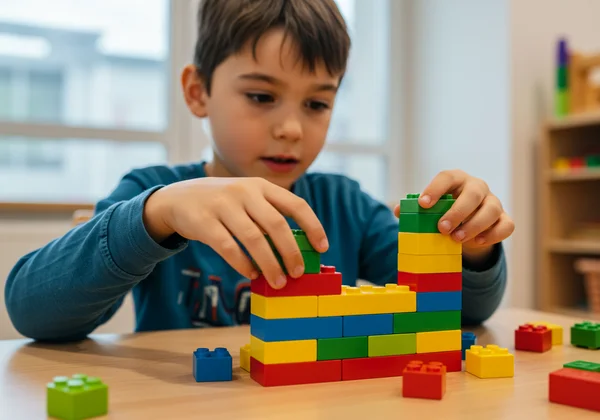
- Math Manipulatives: Use blocks, beads, or even LEGOs to solve math problems.
- Active Memorization: Let them walk around the room while reciting vocabulary words or spelling lists. Tossing a ball back and forth while quizzing them can also be very effective.
- Science Experiments: Instead of just reading about a concept, do the experiment. Building a model volcano is more memorable than reading a chapter about one.
Designing a Dynamic & Active Study Space
A kinesthetic learner's study space shouldn't be restrictive. Consider a standing desk or a wobble chair that allows for subtle movement. Keep materials for projects, like clay, building blocks, and art supplies, easily accessible. Allow for frequent "movement breaks" where they can stretch, do a few jumping jacks, or run around outside for five minutes. This helps them reset and focus better. A great first step is to take our free learning style quiz.
Role-Playing & Practical Application for Learning
Help your child connect abstract concepts to the real world. If they are learning about a historical event, encourage them to act it out. If they are studying a new language, role-play a conversation in a restaurant. This type of applied learning makes the information relevant and sticky for a kinesthetic mind.
Empower Your Child: Take the Next Step with Their Learning Style
Understanding and supporting your child's learning style is one of the greatest gifts you can give them. It replaces frustration with confidence, anxiety with curiosity, and homework battles with moments of connection. You now have the foundational knowledge and practical strategies to make a real difference at home. The journey starts with a single, simple step: discovering their unique profile.
Are you ready to unlock a more effective and joyful learning path for your child? Find your child's learning style profile on our website. The quiz is free, quick, and requires no registration. In just a few minutes, you’ll receive personalized insights that will help you put these strategies into action and empower your child to succeed.
Frequently Asked Questions for Parents About Learning Styles
What are the main learning styles for children?
The three primary learning styles for children, based on the VAK model, are Visual (learning by seeing), Auditory (learning by hearing), and Kinesthetic (learning by doing). Each child has a unique blend of these styles, but one is often more dominant.
How can I accurately identify my child's learning style at home?
Observation is key. Watch how they play, tackle problems, and explain things to you. However, the most reliable and fastest way to get a clear picture is by having them complete a well-designed questionnaire. A free learning style quiz can provide an objective snapshot of their preferences.
Is it normal for my child to have a mix of learning styles?
Absolutely! It is very common for children to be multimodal, meaning they use a combination of learning styles. The goal isn't to fit them into a rigid box but to identify their strongest preference so you can leverage it, especially when they are learning challenging new material.
Can a learning style quiz help my child improve their grades?
A learning style quiz is a tool for insight, not a magic wand. By identifying your child's preferred learning method, you can help them study more efficiently and effectively, which often leads to better comprehension, higher confidence, and improved academic performance. When you match study techniques to their style, they can absorb and retain information more easily. Ready to see the difference? Start the learning style quiz today.