Learning Style Quiz: Science, Myths, & The JKAV Model Explained
The concept of a learning style quiz has been a cornerstone of educational discussions for decades. But in an age of skepticism, a critical question arises: Are learning styles just a fad, or is there real science behind them? This article dives deep into the evidence, debunks common misconceptions, and explains how understanding your unique learning preferences through models like JKAV™ can genuinely transform your approach to education and personal growth. Instead of getting lost in debate, let's explore how this knowledge can empower you. You can start by discovering your learning style with our quick and free tool.

Debunking Common Learning Style Myths
Before we explore the science, it's crucial to clear the air. The conversation around learning styles is often clouded by misinformation that can hinder progress. By addressing these learning style myths, we can build a more accurate and useful understanding of how we learn best.
Are Learning Styles Just a Trend or a Valid Concept?
One of the most persistent criticisms is that learning styles are a baseless trend. This myth stems from a misunderstanding of what learning styles represent. They are not rigid, unchangeable boxes that define a person's abilities. Instead, they are better understood as preferences—the natural ways we tend to process and retain information most effectively.
While some rigid theories have been questioned by modern research, the underlying concept that individuals have different cognitive inclinations is well-supported. The goal isn't to label a student as "only a visual learner" but to recognize their preference for visual aids and leverage that to enhance their comprehension. It’s about personalizing the learning process, not restricting it.
Is One Learning Style Superior to Others?
Another common myth is the idea of a hierarchy among learning styles. Is it better to be a kinesthetic learner than an auditory one? The simple answer is no. Each learning preference has unique strengths and challenges depending on the context.
A visual learner might excel at interpreting charts and diagrams, while an auditory learner can absorb complex information from a lecture with ease. A kinesthetic learner thrives in hands-on labs and practical applications. True effectiveness comes from recognizing your dominant style and developing strategies to engage your non-dominant ones, creating a flexible, well-rounded approach to learning.
The Science of Personalized Learning Preferences
With myths out of the way, we can focus on the science of learning and how individual preferences are a real and observable phenomenon. While the debate continues in academic circles, the practical application of understanding these preferences provides tangible benefits for learners of all ages. This is where learning style research becomes a powerful tool.
How Our Brains Process Information Uniquely
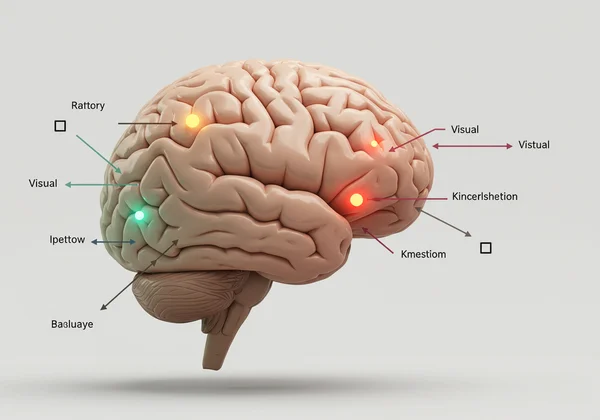
Neuroscience shows us that different regions of the brain are activated by different types of sensory input. For example, the occipital lobe is central to processing visual information, while the temporal lobe is key for auditory processing. The cerebellum and motor cortex are vital for kinesthetic or hands-on activities.
While everyone uses all these areas, our neural pathways can develop preferences based on genetics, experiences, and repeated practice. This neurological diversity is the foundation of learning preferences. Understanding that you tend to rely more on visual or auditory pathways helps you intentionally seek out information in formats that your brain processes most efficiently.
What Modern Research Says About Learning Style Utility
Modern learning style research has shifted from trying to prove that matching teaching to a style drastically improves outcomes to a more nuanced view. The real value lies in metacognition—the act of thinking about one's own thinking. When you identify your learning preference, you gain a powerful tool for self-awareness.
This self-awareness allows you to actively choose better study habits, communicate your needs to educators, and tackle difficult subjects with a tailored strategy. This evidence-based approach to self-improvement is where the concept truly shines, empowering you to become a more effective and confident learner. Why not try our visual auditory kinesthetic test to gain this insight?
Understanding the JKAV™ Model: Visual, Auditory, Kinesthetic
Many models exist to categorize learning preferences, but one of the most practical and widely recognized is the VAK (Visual, Auditory, Kinesthetic) framework. Our platform utilizes an optimized version known as the JKAV model, which builds on this solid foundation with data from over 1.4 million users to ensure relevance and accuracy.
The Core Principles of VAK and JKAV™
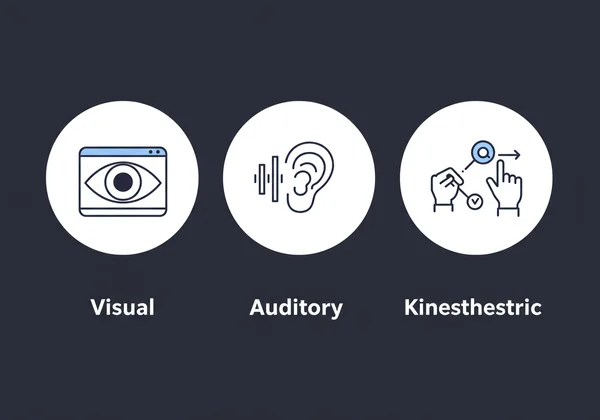
The VAK model identifies three primary channels for learning:
-
Visual Learners prefer seeing information through charts, graphs, videos, and written text. They often create mental images to remember concepts.
-
Auditory Learners learn best by hearing. They benefit from lectures, discussions, audiobooks, and repeating information aloud.
-
Kinesthetic Learners learn by doing. They need to physically engage with the material through experiments, role-playing, and hands-on projects.
The JKAV™ model refines this by using carefully designed questions that analyze your responses to determine your dominant preference with greater precision. It acknowledges that most people are a blend of styles but helps pinpoint which one is your strongest asset.
How Our Quiz Identifies Your Dominant Preference
Our free learning style quiz guides you through a series of thoughtful questions about how you approach different situations and tasks. Your answers create a profile that reveals your primary learning style. The process is designed to be quick, intuitive, and, most importantly, free from the need to register or provide personal information upfront.
Once you complete the quiz, you receive an immediate summary of your profile. For those seeking deeper insights, we offer an optional AI-driven analysis that provides a comprehensive report with actionable strategies tailored for students, educators, and parents. This is a key step in turning self-discovery into real-world success. Find your style in just a few minutes.
The Practical Impact of Knowing Your Learning Style
Understanding the theory is one thing, but the real power comes from applying this knowledge. An evidence-based learning strategy is one that uses data—in this case, your own learning preference—to make smarter decisions about how you study, teach, or parent.
Boosting Academic Success and Retention
For students, identifying a learning style is a game-changer. A visual learner who has been struggling with lecture notes can switch to creating mind maps and flashcards. An auditory learner can start recording lectures to review later. A kinesthetic learner might build a model to understand a complex scientific concept. These small adjustments lead to less frustration, better information retention, and improved academic performance.
Applying Insights for Professional & Personal Growth
This concept is not just for students. In the workplace, understanding your learning style helps you excel in training programs and master new skills more efficiently. A professional who knows they are a kinesthetic learner might volunteer for a hands-on project to learn a new software, rather than just reading the manual. This self-knowledge fosters a commitment to lifelong learning and continuous personal development.

Empower Your Learning Journey with Scientific Insights
Navigating the worlds of education and personal development can be challenging. The debate over learning styles can be confusing, but the practical value of understanding your personal preferences is undeniable. It's not about restrictive labels; it's about empowerment, self-awareness, and creating a personalized roadmap for success. By moving past the myths and embracing the science of individual differences, you can unlock your full potential.
Are you ready to stop guessing and start learning smarter? Take the first step on your journey of discovery. Take our free quiz today to receive your personalized profile and unlock actionable strategies to transform the way you learn, teach, and grow.
Frequently Asked Questions
What are the main learning styles identified by models like JKAV™?
The JKAV™ model, like the classic VAK framework, focuses on three primary sensory receivers: Visual (learning by seeing), Auditory (learning by hearing), and Kinesthetic (learning by doing). Our quiz helps you determine which of these is your dominant preference for processing new information.
How can I accurately identify my own learning style?
The most effective way is through a well-designed self-assessment questionnaire. A quality learning style quiz for students and adults will ask questions about your behaviors and preferences in various situations. Our free, data-driven learning styles quiz is designed to provide you with a reliable and insightful profile in just a few minutes.
Is there scientific evidence supporting learning styles?
Yes, while there is debate about the "meshing hypothesis" (matching teaching style directly to learning style), there is strong evidence in neuroscience and cognitive psychology that individuals have preferred ways of processing information. The utility of identifying these preferences lies in enhancing metacognition and empowering learners to choose effective strategies for themselves.
Can my learning style change over time?
Yes, learning preferences can be fluid. While you may have a dominant style, you can develop your non-dominant ones through practice and exposure to different learning environments. Your style might also shift depending on the subject matter or task at hand. Regularly checking in on your preferences can be a useful part of your personal growth.