Learning Style Quiz vs. Disability Screening: What's the Difference?
As a parent or educator, you want to see every learner succeed. But when a student struggles, it’s natural to ask why. Is it a simple matter of using the wrong study method, or could it be a sign of something more? This question often leads to confusion between two very different concepts: learning styles and learning disabilities.
Understanding the distinction is crucial. One involves identifying personal preferences to make learning more effective, while the other involves recognizing a clinical condition that requires professional support. This article will clarify these differences, helping you know when a simple assessment is helpful and when it's time to seek expert evaluation.
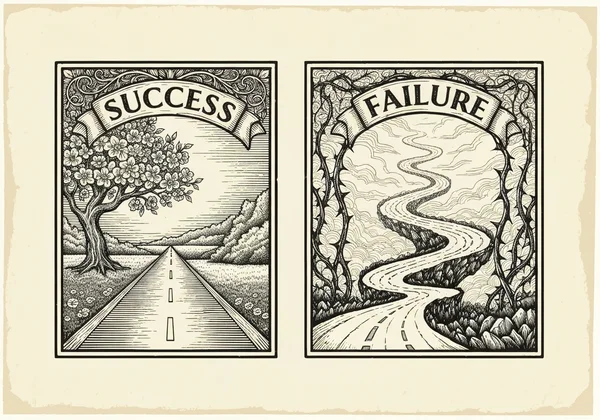
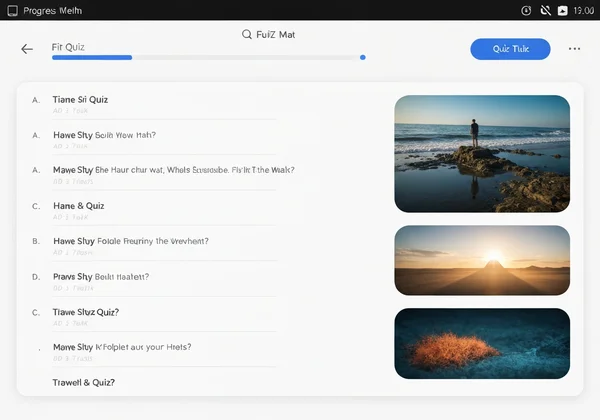
A great first step in understanding a learner's unique approach is to explore their preferences. A simple learning style quiz can provide valuable insights into whether they absorb information best through seeing, hearing, or doing.
Understanding Learning Styles: Preferences, Not Diagnoses
The concept of learning styles is about optimization. It’s a framework for understanding how an individual naturally prefers to receive and process new information. It is not a measurement of intelligence or ability but a guide to making the learning process smoother and more engaging.
What is a Learning Style? Exploring Visual, Auditory, and Kinesthetic Preferences
Most learning style models focus on a few key sensory channels. Our platform uses the widely recognized VAK model, which centers on three primary preferences:
- Visual Learners: These individuals prefer to learn by seeing. They benefit from charts, diagrams, mind maps, written instructions, and videos. They often remember faces better than names and may take detailed notes to absorb information.
- Auditory Learners: These learners retain information best through hearing. They thrive in lectures, discussions, and group activities. They might read aloud to themselves, enjoy audiobooks, and use mnemonic devices involving rhymes or jingles.
- Kinesthetic Learners: Also known as tactile learners, these individuals learn by doing, moving, and touching. They need hands-on experiences, experiments, and physical activity to connect with a subject. Sitting still for long periods can be a major challenge for them.
While most people have a dominant preference, it's common to have a mix of all three. A learning style is a tendency, not a rigid box.
How a Learning Style Quiz Helps Everyday Learning
A learning style quiz is a self-assessment tool designed to reveal these personal preferences. Its purpose is entirely positive and practical: to empower you with strategies that align with your natural strengths.
By taking a free learning style test, a student can discover that they are a strong visual learner and start using flashcards. A teacher might realize their class has many kinesthetic learners and incorporate more hands-on projects. A parent can learn to help their auditory learner study for a test by talking through the concepts instead of just re-reading the textbook. The goal is to enhance learning, boost confidence, and reduce frustration.
What Are Learning Disabilities? Definition and Common Types
A learning disability is fundamentally different. It is a neurological condition that affects the brain's ability to process, store, and respond to information. It is not related to a person's intelligence or motivation. These are recognized clinical diagnoses that can create significant challenges in traditional academic settings.
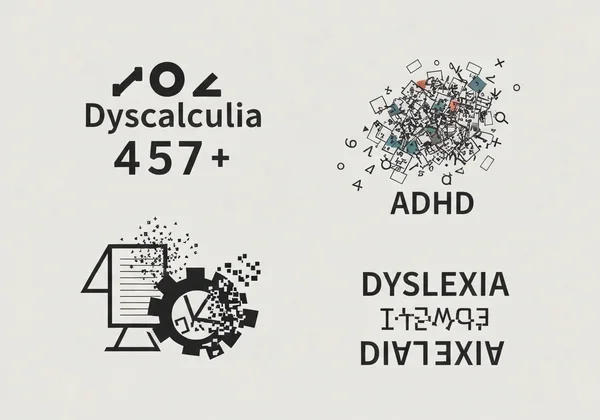
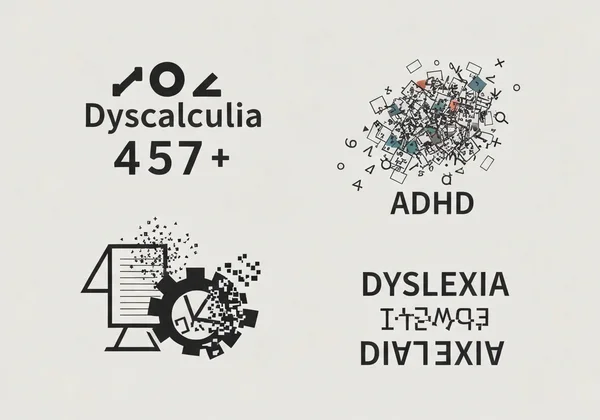
Dyslexia, Dyscalculia, and ADHD: Specific Learning Disorders Explained
While there are many types of learning disabilities, some of the most common include:
- Dyslexia: This is a specific learning disorder that primarily affects reading and language-related skills. Individuals with dyslexia may struggle with decoding words, spelling, reading fluency, and recognizing sounds in language.
- Dyscalculia: This disorder impacts a person's ability to understand, learn, and perform math and number-based operations. Challenges can include difficulty with basic arithmetic, understanding quantities, and telling time.
- Attention-Deficit/Hyperactivity Disorder (ADHD): While not exclusively a learning disability, ADHD often co-occurs and significantly impacts learning. It is characterized by persistent patterns of inattention, hyperactivity, and impulsivity that interfere with functioning and development.
These aren’t preferences. They’re ongoing challenges needing tailored support strategies from professionals.
Recognizing Potential Warning Signs in Students
If you’re concerned a student’s struggles go beyond a simple mismatch in learning style, it's helpful to be aware of potential warning signs. Remember, these are not for diagnosis but for observation.
Consider seeking professional advice if a student consistently shows several of the following signs:
- Significant difficulty reading, writing, or spelling despite adequate instruction.
- Trouble remembering basic facts, like math tables or the alphabet.
- Persistent confusion with directions (e.g., left vs. right) or telling time.
- Extreme difficulty staying organized or managing time.
- Trouble following multi-step instructions.
- Poor coordination or motor skills compared to peers.
- Intense frustration or avoidance of academic tasks.
Key Differences: Learning Style vs. Learning Disability
Understanding the core differences between a learning style and a learning disability is the most important step in providing the right kind of help. Mistaking one for the other can lead to ineffective strategies and unnecessary frustration for the learner.
How Diagnostic Screening Differs from Preference Assessments
The process for identifying a learning style versus a learning disability is vastly different, highlighting the gap between a simple preference and a clinical condition.
-
Preference Assessment (Learning Style Quiz): This is an informal questionnaire. It is typically free, quick, and can be done online by anyone. The results offer suggestions and insights for personal development. You can start your test in just a few minutes without any registration.
-
Diagnostic Screening (Learning Disability Evaluation): This is a formal, comprehensive evaluation conducted by a qualified professional, such as a clinical psychologist, educational psychologist, or neuropsychologist. It involves standardized testing, observations, interviews, and a review of academic history. The goal is to arrive at a clinical diagnosis.
Why the Distinction Matters for Effective Education and Support
Knowing the difference ensures that a learner receives appropriate support. Trying to address a learning disability like dyslexia with only visual learning strategies is like trying to fix a broken bone with a bandage—it misses the root cause and won't be effective.
Conversely, pathologizing a simple preference can cause unnecessary anxiety. Fidgeting in class doesn’t always mean ADHD. A kinesthetic learner might simply need movement breaks to focus better. By first exploring preferences, you can implement simple changes. If those changes don't help and struggles persist, it signals that a deeper evaluation may be necessary.
Next Steps: When to Seek Professional Support
Once you understand the difference, you can create a clear plan of action. Every learner deserves to thrive. Start by creating a supportive environment that adapts to their unique needs.
Strategies for Supporting Diverse Learners and Embracing Neurodiversity
Embracing neurodiversity in education means recognizing that everyone's brain works differently and that these differences are natural variations, not deficits. Whether a student has a strong learning preference or a diagnosed disability, creating a flexible and inclusive environment is key.
- Offer multiple ways to learn: Present information through visuals, audio, and hands-on activities.
- Provide options for demonstrating knowledge: Allow students to show what they know through writing, oral presentations, or creative projects.
- Use assistive technology: Tools like text-to-speech software or graphic organizers can benefit all learners.
- Focus on strengths: Celebrate what a student does well to build their confidence and motivation.
Resources for Parents and Educators Beyond Learning Style Quizzes
While a learning style quiz is a fantastic resource for everyday optimization, it is not a substitute for professional help. If you suspect a learning disability, the following steps are recommended:
- Talk to the Teacher: Share your observations and ask for their insights on the student's performance in the classroom.
- Consult with the School: Speak with the school counselor or special education coordinator to discuss available resources and evaluation options.
- See a Specialist: Talk to your pediatrician or seek a referral to a child psychologist or educational specialist for a formal evaluation.
Final Thoughts
Understanding the difference between learning styles and disabilities ensures you take the right steps to support a learner. A learning style is a preference for how you learn best, unlocking greater efficiency and enjoyment in your studies. A learning disability is a challenge rooted in how the brain processes information, requiring specialized strategies and professional guidance.
Our platform is designed to help you with that first crucial step: understanding preferences. While it can’t replace professional diagnosis, our quiz helps you discover practical strategies aligned with your strengths. If you have serious concerns about a potential learning disability, seeking a professional evaluation is the most important and responsible next step.
Discover your learning style in minutes and unlock tailored study tips with our free quiz.
Frequently Asked Questions About Learning Styles and Disabilities
Can a learning style quiz diagnose ADHD or dyslexia?
No, absolutely not. A learning style quiz is a simple self-assessment tool for identifying personal preferences (Visual, Auditory, Kinesthetic). ADHD and dyslexia are complex neurodevelopmental disorders that can only be diagnosed by a qualified medical or psychological professional after a comprehensive evaluation.
What should I do if I suspect my child has a learning disability?
The first step is to document your specific concerns. Then, schedule a meeting with your child's teacher to discuss their observations. From there, you can speak with school administrators about evaluation options or consult your pediatrician for a referral to a specialist. Early and professional intervention is key.
Are learning styles a real scientific concept like learning disabilities?
Learning disabilities like dyslexia are clinically diagnosed conditions with a strong basis in neuroscience. The concept of learning styles is more of an educational model or theory about individual preferences. While some researchers debate its scientific validity, millions of educators and learners find it to be a practical and helpful framework for personalizing the learning experience.
How can understanding learning styles still help a student with a diagnosed disability?
For a student with a diagnosed disability, a professional support plan is essential. However, understanding their learning style can be a valuable complementary tool. For example, knowing a student with ADHD is also a strong kinesthetic learner can help a teacher design interventions that incorporate movement, making it easier for the student to focus and engage. Discovering these preferences can add another layer of personalization to their support plan, and our free tool can help with that.