Learning Techniques for Students: 7 Active Methods That Actually Help
Learning techniques work best when they turn study time into active thinking, not just longer hours at a desk. Many students reread notes, highlight pages, or watch lessons again because those habits feel familiar. The problem is that familiar does not always mean memorable. Better study routines ask you to recall, explain, organize, apply, and reflect on what you are learning. If you also know whether you prefer visual, auditory, reading-based, or hands-on study inputs, you can choose techniques that feel easier to repeat. A quick learning preference quiz can support that reflection without turning your results into fixed labels.

Why Passive Studying Usually Feels Easier Than It Works
Passive studying often feels productive because the material is right in front of you. You can underline a paragraph, copy a definition, or replay a lecture and feel busy. Yet recognition is not the same as recall. When the book is open, the answer can seem obvious. When the book closes, your brain has to rebuild the idea from memory.
That rebuilding is the useful part. Effective learning techniques create a small amount of desirable difficulty. They ask you to retrieve an idea, connect it to examples, notice what is missing, and try again. That effort may feel slower in the moment, but it gives your brain clearer signals about what is solid and what still needs review.
This matters for students because time is limited. A strong technique should help you answer three questions: What do I understand? What can I use? What should I study next? The best routine usually combines several methods rather than relying on one favorite habit.

The 7 Learning Techniques Worth Practicing
The following seven learning techniques are practical enough for daily study and flexible enough for different subjects. You do not need to use all of them every day. Pick the method that matches the task in front of you, then adjust it based on your attention, confidence, and results.
1. Active Recall
Active recall means trying to bring information back from memory before you look at the answer. Instead of rereading your notes on photosynthesis, close the page and write everything you remember. Then check your notes and mark the gaps.
Use active recall for definitions, formulas, dates, vocabulary, processes, and anything you must explain without prompts. Good formats include flashcards, blank-page brain dumps, self-made quizzes, and spoken answers. The key is to test yourself early, before you feel completely ready.
A simple active recall cycle looks like this:
- Read or review a small chunk of material.
- Hide the source.
- Write, speak, draw, or type what you remember.
- Compare your answer with the source.
- Restudy only the missing or confused parts.
2. Spaced Repetition
Spaced repetition means reviewing material across several sessions instead of cramming it into one long block. A short review today, another in two days, and another next week usually beats one exhausting session the night before an exam.
This technique is especially helpful for content that fades quickly: language vocabulary, anatomy terms, historical facts, math formulas, and key theories. You can use a flashcard app, a paper card box, or a simple calendar. What matters is the spacing, not the tool.
Try this rhythm for a new topic: review it after class, review it the next day, revisit it three or four days later, then test it again the following week. If an item feels easy several times in a row, move it farther apart. If it feels shaky, bring it back sooner.
3. The Feynman Technique
The Feynman technique asks you to explain a concept in plain language, as if you were teaching it to someone new. It reveals whether you truly understand the idea or only recognize the words around it.
Choose one concept and write a short explanation without using jargon. If you must use a technical term, define it in everyday language. When you get stuck, return to your source, fill the gap, and revise the explanation. This method works well for science concepts, literature themes, economics principles, grammar rules, and professional training material.
For auditory learners, speaking the explanation aloud can be powerful. For visual learners, a whiteboard version may work better. For reading and writing preferences, a one-page explainer can become a useful review sheet.
4. Concept Mapping
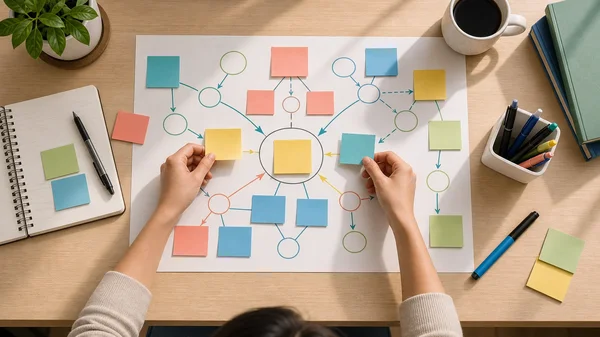
Concept mapping turns ideas into a visual network. Start with the main topic in the center, then add branches for subtopics, examples, causes, effects, steps, or comparisons. Draw arrows between ideas that influence each other.
This technique helps when a subject feels scattered. It is useful for biology systems, history timelines, essay planning, psychology theories, business models, and any class where facts need to connect into a bigger structure. The goal is not to create a beautiful poster. The goal is to see relationships.
If your map becomes crowded, that is useful feedback. Split it into smaller maps or turn one branch into a study question. A messy map can show you exactly where the topic needs clearer organization.
5. Practice Testing
Practice testing is different from passive review because it asks you to perform the skill before the real assessment. For a math class, that means solving problems without looking at examples. For a language class, it means producing sentences. For a history class, it might mean answering short essay prompts from memory.
Practice tests are most helpful when you review the results carefully. Do not only count the score. Sort mistakes into categories: content you forgot, instructions you misread, steps you skipped, or questions you could not start. Each category points to a different next action.
This is also where a learning style reflection tool can help you choose the format you will actually repeat. A visual learner might turn missed questions into diagrams. An auditory learner might explain each correction aloud. A hands-on learner might rebuild the process with examples.
6. Interleaving
Interleaving means mixing related problem types or topics instead of studying one type in a long, uninterrupted block. For example, instead of doing twenty identical algebra problems, you might rotate among factoring, graphing, and word problems.
This can feel harder because you have to decide which method fits each question. That decision-making is the benefit. Interleaving trains you to recognize patterns, not just repeat the last procedure you saw. It works well for math, science problem sets, grammar practice, music drills, language learning, and exam preparation.
Use interleaving after you understand the basics. If a topic is brand new, start with focused practice. Once you can do the skill with guidance, begin mixing it with similar skills so your brain learns when to use each one.
7. Reflection and Metacognition
Metacognition means thinking about your own thinking. In study routines, it means pausing to ask: What worked? What felt confusing? What will I change next time?
This technique is easy to skip because it does not look like studying. But a two-minute reflection can prevent weeks of repeating a weak routine. After each study session, write three quick notes: one thing you understand better, one thing still unclear, and one next step.
Reflection is also useful after quizzes, projects, and feedback from teachers. Instead of treating a grade as the final word, use it as information. Did you run out of time? Misunderstand the question? Forget key vocabulary? Choose the wrong study method? The answer shapes your next plan.
How to Match Techniques to Your Learning Preferences
Learning preferences are not boxes you have to stay inside. They are clues about which study actions may feel more natural, motivating, or repeatable. A strong learner still uses more than one mode, especially when the subject demands it.
Visual learners may benefit from concept maps, color-coded comparison charts, timelines, diagrams, and spatial layouts. Active recall can become more visual by asking yourself to redraw a process or label a blank diagram.
Auditory learners may prefer explaining ideas aloud, recording short summaries, discussing practice questions, or using call-and-response flashcards. The Feynman technique fits especially well because it turns understanding into speech.
Reading and writing learners often like summaries, question lists, margin notes, rewritten explanations, and structured study guides. To make these active, write from memory first, then check the source.
Kinesthetic or hands-on learners may learn best by solving, building, sorting, acting out, teaching, or applying ideas to real examples. Practice testing, interleaving, and case-based study can make abstract material feel concrete.
The most useful question is not "What type am I forever?" It is "Which technique helps me engage with this material today?" Treat preferences as a starting point, then measure what improves recall, confidence, and follow-through.

A Simple Weekly Study Routine
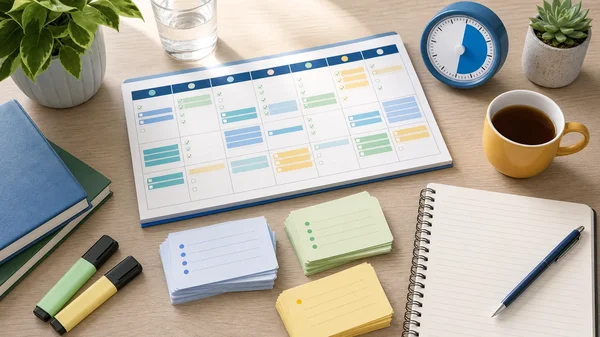
A good routine does not need to be complicated. It needs to make active learning easier to repeat. Here is a flexible weekly pattern you can adapt for school, online courses, professional training, or self-study.
On the day you learn something new, spend ten minutes creating retrieval prompts. Turn headings into questions, make flashcards, or write a blank-page challenge. The goal is to prepare your future self to practice recall.
The next day, run a short active recall session. Hide your notes and answer the prompts. Mark anything that feels weak, then restudy only those sections. This keeps review focused instead of letting it expand into rereading everything.
Two or three days later, use a different technique. Explain the topic with the Feynman method, draw a concept map, or complete practice problems. Changing the format helps you notice whether you can transfer the idea beyond the original notes.
Before a quiz or deadline, use interleaving and practice testing. Mix problem types, simulate likely questions, and review mistakes by category. End with a short reflection so your next study block has a clear target.
You can keep this routine on one page:
| Study moment | Best technique | What to produce |
|---|---|---|
| Same day | Question prompts | Flashcards or self-test questions |
| Next day | Active recall | Corrected answers |
| Midweek | Feynman or concept map | Plain-language explanation or map |
| Before assessment | Practice test and interleaving | Mistake list and next-step plan |
Common Mistakes That Make Good Techniques Less Effective
The first mistake is waiting until you feel ready to test yourself. Active recall works because it exposes uncertainty. If you delay it until everything feels easy, you lose much of the benefit.
The second mistake is using too many tools. A perfect app, notebook system, or printable worksheet will not help if the study action remains passive. Keep the system simple enough that you can maintain it on a tired day.
The third mistake is confusing learning preferences with limits. A visual preference does not mean you should avoid discussion. An auditory preference does not mean diagrams are useless. Real learning often improves when you combine modes.
The fourth mistake is ignoring feedback. Missed questions, unclear explanations, and messy concept maps are not failures. They are signals. Use them to choose the next technique rather than repeating the same review habit.
Use Learning Techniques as Experiments, Not Labels
Learning techniques are most helpful when you treat them as experiments. Choose one method, use it for a real study task, and watch what happens. Did you remember more? Did you find gaps earlier? Did the session feel easier to begin? Did your next quiz, discussion, or assignment show improvement?
For students exploring how they prefer to study, an educational self-reflection quiz can offer a gentle starting point. Use the result as a planning aid, then test different techniques in real study sessions. Your goal is not to prove that one style is your permanent identity. Your goal is to build a flexible toolkit.
Start small. Pick one class, one topic, and one technique this week. For example, use active recall for biology vocabulary, a concept map for history causes and effects, or the Feynman technique for a difficult math rule. After three sessions, keep what works, revise what feels awkward, and add another technique only when the first one is stable.
FAQ
What are the 4 techniques of learning?
Four widely useful learning techniques are active recall, spaced repetition, practice testing, and reflection. Active recall helps you retrieve information from memory. Spaced repetition spreads review across time. Practice testing lets you perform before the real assessment. Reflection helps you decide what to change next.
What are the 7 methods of learning?
Seven practical methods are active recall, spaced repetition, the Feynman technique, concept mapping, practice testing, interleaving, and metacognitive reflection. Together, they help you remember, explain, organize, apply, compare, and improve what you study.
What are the 4 types of study methods?
One simple way to group study methods is retrieval, spacing, organization, and application. Retrieval includes flashcards and self-quizzing. Spacing includes planned review over days or weeks. Organization includes outlines and concept maps. Application includes practice problems, case studies, and teaching the material.
What are examples of learning techniques?
Examples include making flashcards, answering questions from memory, explaining a topic in simple language, drawing a concept map, taking a practice test, mixing related problem types, and writing a short study reflection after each session.
Which learning technique is best for students?
There is no single best technique for every student or subject. Active recall and spaced repetition are strong starting points for many learners, while practice testing is valuable when performance matters. The best choice depends on the material, the deadline, and what helps you stay engaged.
How do learning styles relate to learning techniques?
Learning styles can help you choose a comfortable entry point, such as diagrams for visual learners or spoken explanations for auditory learners. They should not limit your options. Most students benefit from combining techniques across visual, auditory, reading-based, and hands-on modes.
How often should I use active learning techniques?
Use at least one active technique in most study sessions, even if the session is short. Ten minutes of recall, explanation, or practice questions can be more useful than a longer session spent only rereading. Increase the frequency before quizzes, exams, presentations, or skill-based assessments.