Printable VAK Learning Style Quiz: Home & Classroom Worksheet
Are you a parent or teacher looking for a simple way to understand how your child or students learn best? With kids glued to screens all day, a simple printable worksheet cuts through the noise. A printable worksheet can offer clear, immediate insights without requiring a screen, making it a perfect starting point for meaningful conversations about learning.
This guide covers the benefits of a printable VAK learning style quiz. You'll learn how it spots preferences and builds better study or teaching habits. While a worksheet is a fantastic first step, we'll also show you how to take those initial findings to the next level. For a deeper, AI-powered analysis and personalized report, you can always discover your style with our free online tool.
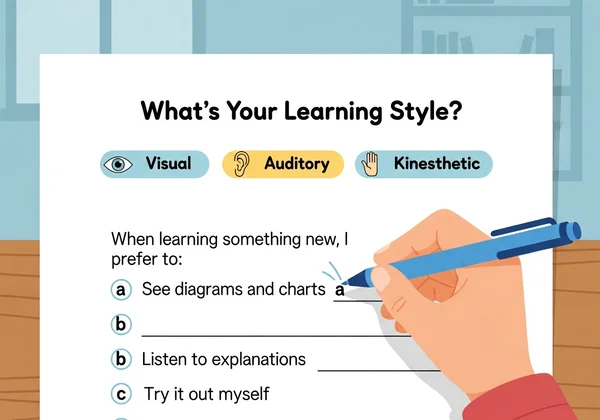
Why Choose a Free Printable Learning Style Quiz?
In today’s fast-paced educational environment, understanding a learner's unique preferences can make all the difference. A free printable learning style quiz serves as an accessible and engaging entry point into this world of personalized education. It’s a practical resource that can be used anywhere, anytime, providing a tangible way to begin a journey of self-discovery for students of all ages.
Understanding the VAK Model: Visual, Auditory, Kinesthetic
At the heart of many learning style discussions is the VAK model, a straightforward framework that categorizes learning preferences into three main types. Understanding this model is the first step in using any VAK-based quiz effectively.
-
Visual Learners: These individuals process information best when they can see it. They thrive on charts, diagrams, mind maps, and written instructions. They often remember faces but forget names and prefer to take detailed notes during a lecture. A visual learner might say, "I see what you mean."
-
Auditory Learners: These learners absorb information most effectively through sound. They benefit from lectures, group discussions, and repeating information aloud. They are often skilled storytellers and can easily recall conversations. An auditory learner might say, "I hear you."
-
Kinesthetic Learners: Also known as tactile learners, these individuals learn best by doing. They need hands-on experience and physical engagement to truly grasp a concept. They excel in activities like experiments, building models, and role-playing. A kinesthetic learner might say, "This feels right."
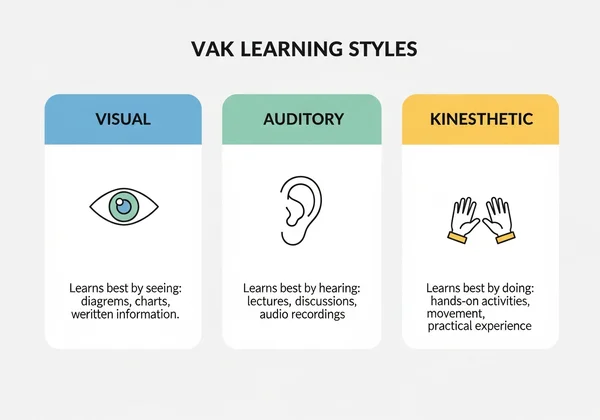
Most people are a mix of these styles, but usually have one dominant preference. A VAK quiz helps identify this primary tendency, providing a crucial clue to unlocking a student's full potential.
Benefits of a Screen-Free Learning Assessment for Kids & Students
Online tools go deep. But for kids, a pen-and-paper quiz wins. It's distraction-free and sparks real thought.
Here are a few key benefits:
- Reduces Screen Time: Parents and educators are increasingly concerned about the amount of time children spend on digital devices. A printable quiz is a refreshing, screen-free alternative.
- Encourages Conversation: Sitting down with a physical worksheet creates a natural opportunity for discussion. A parent can talk through the questions with their child, or a teacher can use it to facilitate a group conversation about how everyone learns differently.
- Provides Tangible Results: The completed worksheet is a physical record that a student can reflect on. It makes the concept of a "learning style" feel more real and personal.
- Simple and Accessible: No internet connection, no logins, no technical glitches. A printable quiz is easy to distribute and complete in any setting, from the living room to the classroom.
Your Step-by-Step Guide to Using the VAK Printable Test
Using a VAK printable test is straightforward. The goal is not to assign a rigid label but to open a dialogue and uncover natural learning tendencies. Whether you are a parent supporting your child at home or an educator managing a diverse classroom, these steps will help you get the most out of the experience.

Instructions for Parents: Easy Home Assessment
Assessing your child's learning style can be a fun and insightful activity. Frame it as a discovery game rather than a test.
- Choose a Quiet Time: Find a relaxed moment when your child is not tired or distracted.
- Read Together: Go through the questions with your child, especially if they are young. Make sure they understand what each question is asking.
- Encourage Honest Answers: Remind them there are no right or wrong answers. The goal is to find out what they prefer.
- Discuss the Results: Once you've scored the quiz, talk about what it means. You might say, "It looks like you really enjoy learning by doing things with your hands. That's fantastic! Let's think of some fun projects we can do."
- Connect to a Deeper Analysis: Treat this as your starting point. For detailed tips and a full report, try our free online quiz next.
Instructions for Educators: Seamless Classroom Integration
A printable quiz can be an invaluable tool for differentiated instruction and building a positive classroom culture.
- Introduce the Concept: Before handing out the worksheet, briefly explain the VAK model to your students. Emphasize that every learning style is equally valuable.
- Allow for Independent Work: Give students time to complete the quiz on their own. This ensures their answers reflect their personal preferences.
- Facilitate a Group Discussion: After scoring, create small groups with mixed learning styles. Ask them to discuss how they might tackle a new project, highlighting their different approaches.
- Inform Your Teaching: Use the results as a general guide. If you notice a high number of kinesthetic learners, incorporate more hands-on activities. If you have many visual learners, ensure you use plenty of diagrams and charts.
Scoring Your Printable Visual Auditory Kinesthetic Quiz Results
Most printable visual auditory kinesthetic quiz worksheets use a simple scoring system. After answering a series of multiple-choice questions, you'll tally the number of "V," "A," and "K" responses.
- Count the totals for each letter (V, A, K).
- The letter with the highest score indicates the dominant learning preference.
- If two scores are very close, it suggests a blended learning style.
Remember, this score is a snapshot. It provides a strong indicator of preference, but it doesn't define a person's entire learning capability. True mastery comes from understanding these preferences and then building a flexible set of strategies around them.
From Printable Insights to Personalized Learning Strategies
Discovering a primary learning style is the "what." The next, more important step is the "so what?" How can you use this information to create real-world success in studying, teaching, and personal development? Your worksheet results are the first step, showing you how to build a more personalized approach to learning.
What Your Primary Learning Style Profile Means for You
Once you've identified a dominant style, you can begin implementing tailored strategies immediately.
- For the Visual Learner: Encourage the use of flashcards with images, color-coding notes, watching documentary videos, and drawing mind maps to connect ideas.
- For the Auditory Learner: Suggest studying with a partner to discuss concepts, recording lectures to listen to later, reading notes aloud, and using mnemonic devices like songs or rhymes.
- For the Kinesthetic Learner: Promote active learning by building models, conducting experiments, using flashcards they can sort and move, and taking frequent study breaks that involve physical activity.
These simple adjustments can significantly improve comprehension and retention. However, for a truly transformative plan, you need more than just a label.
Unlock Deeper AI-Powered Insights with Our Online Quiz
A printable worksheet gives you an excellent foundation, but our free online learning style quiz is designed to give you the complete blueprint. Based on the robust JKAV™ model and optimized with data from over 1.4 million users, our quiz goes far beyond a simple VAK score.
Take our quick online test to unlock an optional AI-powered analysis that provides:
- A Detailed Profile: Understand your style's nuances and how secondary preferences support your dominant one.
- Actionable Strategies: Receive a personalized report filled with specific techniques for studying, teaching, or professional development.
- A Success Roadmap: Our AI doesn't just tell you what your style is; it helps you build a plan to use that knowledge for tangible results in school, work, and life.
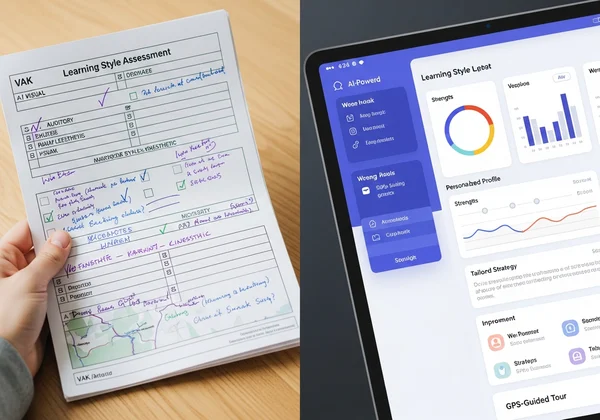
Think of the printable quiz as the map, and our online analysis as the GPS-guided tour.
Empower Your Learning Journey: Take the Next Step Online
Understanding your unique learning style is an empowering first step toward becoming a more effective and confident learner. A printable quiz offers a simple, screen-free way to begin this exploration, opening up valuable conversations for parents, teachers, and students alike. It helps you identify whether you lean towards Visual, Auditory, or Kinesthetic methods.
But this initial discovery is just the beginning. To truly harness the power of this knowledge, you need strategies tailored specifically to you. The insights from a simple worksheet can be transformed into a detailed action plan with the right tools.
Ready to turn those worksheet results into your custom learning plan? Start your test on our website today. It's free, takes only a few minutes, and provides the deep, AI-driven analysis you need to optimize your learning journey.
Frequently Asked Questions About Learning Styles & Our Quiz
How do you identify your learning style beyond a basic quiz?
A basic quiz is a great starting point for self-reflection. To go deeper, pay attention to your habits. What methods do you naturally use when trying to learn something new? Do you doodle, talk it out, or pace around? For a comprehensive and data-driven perspective, an advanced assessment like our online analysis can provide a much more detailed and actionable profile.
Are there different types of learning styles, or just VAK?
The VAK model is one of the most popular and easy-to-understand frameworks. However, other models exist, such as VARK (which adds Reading/Writing as a fourth style) and Kolb's model of experiential learning. Our platform is rooted in the proven JKAV™ model, which provides a practical and effective foundation for real-world application.
Can I really improve my study habits based on my learning style?
Absolutely. Aligning your study techniques with your natural learning preferences can make a significant difference. It’s not about studying harder, but studying smarter. When you use methods that work with your brain instead of against it, you can improve retention, reduce frustration, and build confidence. Our tool is designed to give you those precise, effective strategies.
Is this printable quiz suitable for all ages?
Yes, the concept of a printable VAK quiz is versatile. For younger children, a parent or teacher should guide them through the questions. For older students and adults, it serves as an excellent self-assessment tool. For any age, the goal is the same: to start a conversation about how we learn best and to take the first step toward a more personalized approach, which you can fully explore with our comprehensible quiz.