Use a Learning Style Result Without Labels
Why a quiz result should start a study experiment, not end it
A learning style result can be useful, but only when it stays flexible. It can point to a starting preference, give language to a study frustration, and suggest a few strategies to try next.
What it should not do is become a fixed identity. A result is most helpful when it opens a small experiment instead of closing off other ways to learn.
That is why a learning style quiz result works best as a planning tool. It can help someone test note-taking, review, and practice methods with more intention. Disclaimer: The information and assessments provided are for educational purposes only and should not replace professional medical advice, diagnosis, or treatment.

What a learning style result can still help with
A result can still be practical even when it is not treated like a verdict.
Use the result as a starting preference, not a verdict
A learning style result can suggest where to begin. If a learner tends to respond well to diagrams, discussion, movement, or written structure, that can guide the first study change.
Vanderbilt University's teaching center says learning styles should not be treated as fixed traits and that teaching or study design should not be limited to one presumed style. That makes a result more useful as a starting preference than as a label.
A study preference quiz can still help because starting points matter. The problem starts when the result becomes a rule. It should not be used to say, "this is the only way this person can learn."
Why context can change how you learn best
The best strategy often changes with the task. A learner might prefer visual review for biology, spoken repetition for language study, and hands-on practice for lab work or skill training.
UCF's Center for Distributed Learning says many learners are multimodal and that preferences can shift depending on task, content, and context. That is why mixed results are not a failure. They are often a more realistic picture of how learning works.

Build a study plan around strategies, not identity
The safest way to use a result is to connect it to a few practical study choices.
Match one strategy to one study task
Instead of saying "I am a visual learner," use a smaller sentence. "I remember definitions better when I map them" is more useful. That kind of sentence leads to action.
A simple 3-step approach works well:
- Pick 1 study task, such as review, memorization, or practice.
- Match 1 strategy to that task.
- Check after 1 week whether it actually helped.
This keeps the result grounded in real work. It also prevents a quiz outcome from becoming a personality claim.
Mix formats when the subject changes
Different subjects ask for different kinds of effort. Reading-heavy courses, problem-solving tasks, and discussion-based topics rarely benefit from the exact same method every time.
That is why it helps to build a small mix instead of a single rule. A learner might combine diagrams with written summaries, or spoken review with movement-based repetition, depending on the material.
A learning strategy tool becomes more useful when it leads to 2 or 3 tested methods instead of one fixed identity.
What to avoid after getting your result
The biggest mistakes usually come from overreading the result rather than from taking the quiz itself.
Do not treat the result as a limit
A result should never become a reason to avoid a subject, a teaching style, or a skill. Saying "this quiz says I cannot learn this way" gives the result too much power.
A better response is to ask what support would make the task easier. Sometimes the answer is more structure. Sometimes it is more examples. Sometimes it is a different sequence of study steps.
Do not use it as a formal assessment substitute
A learning style quiz is not a formal educational evaluation. It cannot diagnose a learning disability, explain every academic difficulty, or replace school-based or clinical assessment.
If persistent learning problems are affecting school, work, confidence, or daily functioning, seek professional help from a qualified educator, school support team, or clinician. That matters even more when someone is worried about a disability, concentration issue, or a broader learning challenge.
A simple weekly check-in to keep the result useful
A short review habit keeps the result flexible and practical.
Track what actually helps you remember
Once or twice a week, write down which study method helped most with recall, focus, or confidence. Keep the notes short. The goal is not perfection. The goal is pattern spotting.
This keeps the attention on outcomes instead of labels. Over time, the learner starts building a personal study map rather than defending one category.
Adjust the mix without overthinking it
If one method stops helping, change it. If a second method works better for a new subject, add it. This kind of adjustment is a strength, not a contradiction.
A result stays useful when it keeps pointing toward better experiments. It stops being useful when it turns into a fixed story about what a person can or cannot do.
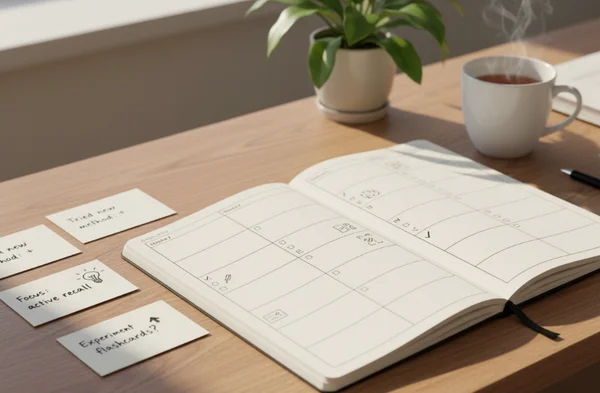
What to do next after your first study experiment
After the first week, keep the strategies that helped and drop the ones that did not. Then test one new method instead of rebuilding the whole plan.
That approach makes the quiz part of a real learning loop. It also keeps the site in its proper role: a self-reflection and educational planning tool, not a final judgment about ability. If learning difficulties stay significant or distressing, seek professional help. A qualified school or clinical pathway is more appropriate than relying on a quiz alone.
FAQ about learning style results
Can a learning style result change over time?
Yes. Preferences can shift with age, subject, context, and study demands, which is why a result should stay flexible.
Is a mixed result normal?
Yes. Mixed results are common, and they often reflect the fact that many learners use more than one strong approach.
Can this quiz replace a formal evaluation?
No. It can support self-reflection and planning, but it cannot replace formal educational or clinical evaluation when deeper concerns are present.