VARK vs. VAK: Find Your Learning Style Quiz
Have you ever wondered why some study methods click instantly while others feel like a struggle? The world of educational psychology offers fascinating answers, often presented in a flurry of acronyms like VARK and VAK. If you've ever felt lost in this alphabet soup, you're not alone. To truly unlock your potential, it helps to understand these frameworks and discover which one resonates most with you. What kind of learner am I? Answering this question is the first step toward more effective learning, and a quality learning style quiz is the perfect tool to guide you.

This article will demystify the two most popular learning style models—VARK and VAK. We’ll explore their differences, their unique strengths, and help you decide which path to self-discovery is right for you. By the end, you'll be ready to take a simple, insightful step toward transforming how you learn, teach, or support a loved one. Are you ready to find your learning style?
Deciphering the VARK Model: The Four Learning Preferences
The VARK model is one of the most well-known frameworks in education. Developed by Neil Fleming, it expands upon the foundational VAK model by adding a fourth crucial category. This model suggests that learners process information through four primary modalities, and figuring out your preference can truly transform your study habits.
Visual, Aural, Read/Write, Kinesthetic: Understanding Each Style
The VARK model breaks down learning preferences into four distinct types, giving a more granular view of how we interact with information. Each one has its own set of characteristics and preferred learning methods. Let’s explore these educational theories.
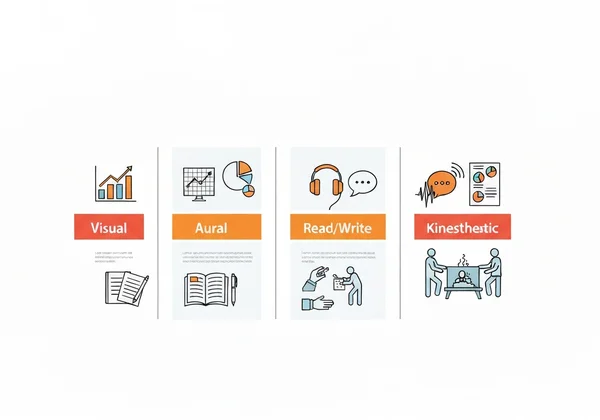
- Visual (V): Visual learners prefer information presented in graphs, charts, diagrams, and other symbolic representations. They excel at seeing the big picture and understanding relationships between concepts through visual aids. A mind map is often a visual learner's best friend.
- Aural (A): Aural learners, also known as auditory learners, learn best by listening. They thrive in lectures, group discussions, and by talking through ideas. They often remember what they hear more easily than what they read and might benefit from recording lectures to play back later.
- Read/Write (R): This is the key addition that separates VARK from VAK. Read/Write learners absorb information most effectively through text. They love making lists, reading textbooks, taking detailed notes, and expressing themselves through the written word.
- Kinesthetic (K): Kinesthetic learners are all about experience and practice. They learn by doing, touching, and moving. They prefer hands-on activities, real-world examples, and practical applications over abstract theories.
Benefits and Criticisms of the VARK Framework
The primary benefit of the VARK model is its specificity, particularly with the inclusion of the Read/Write category. It acknowledges that interacting with text is a distinct preference for many, separate from simply seeing diagrams or images. This detail can provide a more nuanced understanding for those who feel they don't quite fit into the simpler VAK categories.
However, some critics argue that this level of detail can lead to over-complication. It can sometimes be harder for individuals to pinpoint a single dominant style, as many people use a mix of these modalities. Even with its detail, the main point is always to gain practical, actionable insights you can use right away.
Understanding the VAK Model: Visual, Auditory, Kinesthetic Foundations
Before VARK, there was VAK—the original, foundational model that identifies the three primary sensory receivers for learning. The VAK model offers a streamlined, powerful framework that is incredibly easy to understand and apply. It focuses on the core ways we experience the world: through sight, sound, and touch. This simplicity is its greatest strength, making it a perfect starting point for anyone new to learning preferences.
The Core Three: How VAK Simplifies Learning Insights
The VAK model is built on a simple yet profound idea. Most of our learning can be traced back to three main pathways. Understanding your primary pathway helps you create effective and personalized study strategies.
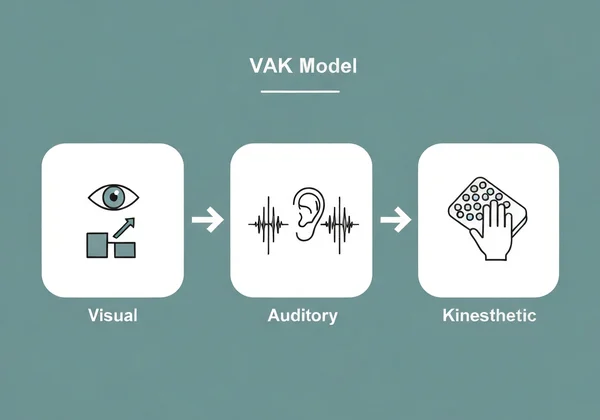
- Visual: Just like in the VARK model, visual learners here prefer seeing information. This includes not just charts and diagrams but also reading text, as the act of seeing words on a page falls under this broad category.
- Auditory: Auditory learners process information best through hearing. They benefit from lectures, discussions, and verbal explanations.
- Kinesthetic: Kinesthetic learners learn through physical experience. This includes hands-on activities, building models, and even the physical act of writing notes (which combines visual and tactile senses).
The Practical Power of the VAK Approach for Everyday Learning
The VAK model’s true power lies in its direct applicability. Because it focuses on three broad, intuitive categories, it’s incredibly easy to identify your preference and start making immediate changes. A student who discovers they are a kinesthetic learner can switch from rereading notes to creating flashcards they can physically manipulate. A parent helping a visual learner can use colorful diagrams to explain a math concept.
This practical focus makes the VAK model an exceptional tool for students, educators, and parents alike. It provides a clear, actionable roadmap without getting bogged down in theory. Are you curious to see where you fall? You can get your VAK profile in just a few minutes.
VARK vs. VAK: Key Differences and Choosing Your Ideal Learning Style Quiz
So, which model is better? The answer isn't about which one is "correct," but which one is most useful for you. Both VARK and VAK offer valuable insights, but they serve slightly different purposes. The choice comes down to whether you prefer a more detailed analysis or a straightforward, actionable plan. Let's compare them to help you select the best visual auditory kinesthetic test for your needs.
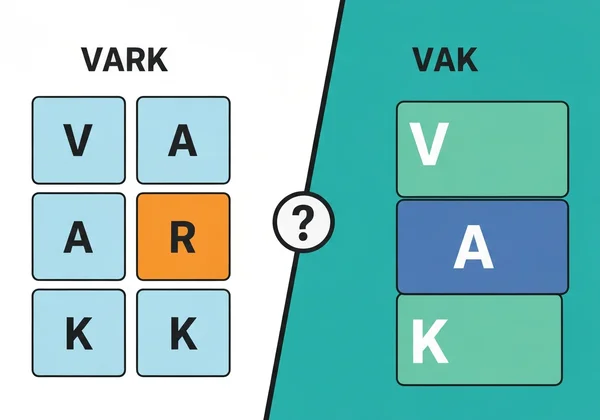
Comparing Focus and Practical Application in Both Models
The most significant difference is the "R" for Read/Write. VARK separates this into its own category, while VAK typically groups reading and writing activities under the Visual and Kinesthetic domains.
- Focus: VARK offers a more granular diagnosis, which can be helpful for academic research or deep self-analysis. VAK provides a broader, more fundamental understanding of your primary learning channel, making it ideal for immediate application.
- Practicality: For most people—students wanting better grades, teachers managing diverse classrooms, or adults learning a new skill—the VAK model's simplicity is a major advantage. It provides clear direction without causing confusion, allowing you to quickly start the assessment and begin implementing new strategies.
Why Our VAK Quiz Offers Actionable, Personalized Learning Insights
Here, we believe that self-discovery should be simple, fast, and empowering. That’s why our quiz is built upon the practical and proven VAK model. We've designed a free, no-registration experience that gives you immediate insights into your dominant learning style.
Our self-assessment tool doesn't just give you a label; it provides a profile of your strengths as a Visual, Auditory, or Kinesthetic learner. Based on the respected JKAV™ model and optimized with data from over 1.4 million users, our quiz delivers reliable results. For those seeking even deeper guidance, we offer an optional AI-powered report that transforms your results into a personalized roadmap for success. We focus on providing actionable advice you can use today to make learning easier and more effective.
Unlock Your True Potential: Take Our Free VAK Assessment
Understanding the difference between VARK and VAK is the first step. VARK provides a detailed, four-part analysis, while VAK offers a streamlined, powerful, and immediately applicable framework. For those looking to quickly identify their strengths and receive practical strategies to improve their learning, the VAK model is an outstanding choice.
Don't let your natural learning talents go untapped. Embracing your unique style can reduce frustration, boost confidence, and make the entire learning process more enjoyable and efficient. Ready to discover your cognitive advantage? Take our free quiz today and unlock a smarter way to learn.
Frequently Asked Questions About Learning Styles and Assessments
What is the main difference between VARK and VAK learning styles?
The primary difference is that the VARK model includes a fourth category: Read/Write. The VAK model incorporates reading and writing into the other three styles (Visual and Kinesthetic). VAK offers a broader, more foundational framework, while VARK provides a more detailed breakdown of learning preferences.
How do I accurately identify my dominant learning style?
The most effective way is to take a well-designed self-assessment. While self-reflection is helpful, a structured quiz can reveal patterns you might not notice. A quality learning style quiz, like the one offered on our site, asks targeted questions to generate a reliable profile of your Visual, Auditory, and Kinesthetic preferences.
Is one learning style model scientifically proven to be better than others?
While academic debate continues about the scientific 'proof' behind learning style theories, what's clear is how many students, teachers, and professionals find them incredibly practical. They're not about rigid diagnoses, but rather tools for self-awareness that truly help you learn more effectively. That's why the VAK model, with its straightforward approach, is so often praised.
Can understanding my learning style improve my academic performance?
Absolutely. When you align your study techniques with your natural learning preferences, information retention and comprehension can improve significantly. A visual learner who switches to using mind maps, or an auditory learner who starts recording lectures, is working with their brain, not against it. This alignment often leads to better grades and reduced study time.
What should I do after taking a learning style quiz?
Your results are a starting point for exploration. The next step is to apply the recommended strategies. If you discover you are a strong kinesthetic learner, actively seek out hands-on projects. If you are an auditory learner, join a study group. You can discover your results on our homepage and get access to tailored tips and an optional, in-depth AI report to guide your next steps.