Visual Learner vs Auditory Learner: Differences, Examples, and Practical Study Tips
If you have ever wondered whether you are a visual learner vs auditory learner, you are probably trying to make studying feel less random. Visual learners often prefer charts, diagrams, color-coded notes, and spatial organization. Auditory learners often prefer listening, talking through ideas, reading aloud, and remembering tone or sequence from spoken explanations. A better question is: which inputs help you notice, organize, and recall information for this task? You can use a learning preference reflection tool as a low-pressure starting point.
Visual Learner vs Auditory Learner: The Core Difference
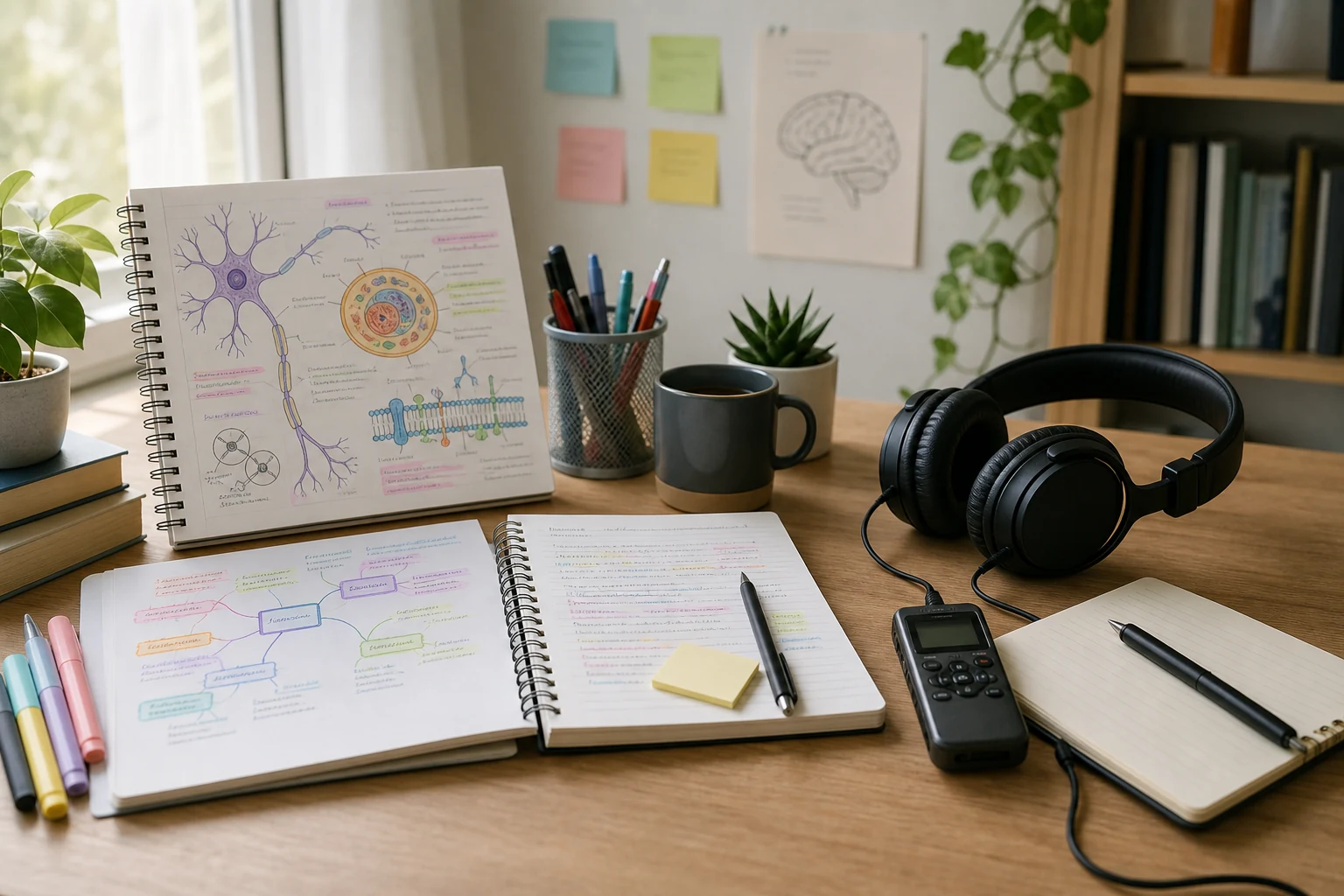
The simplest difference is the preferred route into understanding. A visual learner tends to process ideas more easily when information is shown. They may remember where a point appeared on a page, how a diagram was arranged, or which color marked a key concept. Visual learning can make abstract relationships easier to see because the learner can compare shapes, arrows, timelines, maps, charts, and written notes at a glance.
An auditory learner tends to process ideas more easily when information is heard or spoken. They may remember a teacher's explanation, the rhythm of a sentence, a discussion with a classmate, or a concept they explained out loud. Auditory learning can make sequence, emphasis, and meaning easier to follow because the learner can hear how ideas connect in real time.
The important nuance is that visual vs auditory learning is not a fixed ability label. It is a preference pattern. A student may prefer diagrams for biology, discussion for history, and hands-on practice for chemistry. Treat the comparison as a way to choose better strategies, not as a rule about what you can or cannot learn.
Visual Learner Characteristics and Examples
Visual learners often like to see the structure of information before they dive into details. They may rewrite notes into headings, boxes, and arrows. They may remember a page layout or a slide image more easily than a spoken explanation. In class or at work, they often benefit from outlines, annotated screenshots, mind maps, calendars, examples on a board, and side-by-side comparisons.
Common visual learner examples include:
- Turning a chapter into a one-page concept map.
- Highlighting only the most important terms instead of coloring everything.
- Sketching a process, even with simple boxes and arrows.
- Using timelines for history, formulas, project steps, or exam planning.
- Watching a demonstration, then pausing to label what happened.
Visual strategies work best when they reduce clutter. A beautiful page of notes is not automatically useful if it hides the main idea. A strong visual study habit asks, "What relationship am I trying to see?" For example, if you are learning vocabulary, a table may help you compare meanings. If you are learning a process, a flowchart may help. If you are learning a debate, a two-column argument map may be clearer than a paragraph of notes.
Auditory Learner Characteristics and Examples
Auditory learners often like to hear the logic of an idea. They may understand a topic better after a lecture, a spoken walkthrough, or a discussion where they can ask follow-up questions. They may also catch meaning from tone, emphasis, pacing, or the order in which points are explained. Some people search for "visual learner vs hearing learner," but "auditory learner" is the more common term.
Common auditory learner examples include:
- Reading notes aloud and listening for gaps.
- Explaining a concept to a study partner.
- Recording a short summary after class, then replaying it.
- Turning formulas, rules, or steps into spoken cues.
- Joining discussion groups where ideas are tested verbally.
Auditory strategies work best when they stay active. Playing a lecture in the background is usually weaker than pausing, summarizing, asking yourself questions, and saying the answer in your own words. If you prefer sound-based study, try short audio loops: listen, pause, explain the main point, then check your notes. This keeps listening connected to retrieval instead of passive exposure.

Visual, Auditory, and Kinesthetic Learning Together
Many searches compare visual learner vs auditory learner vs kinesthetic learner because the VAK model is familiar and easy to remember. Kinesthetic learners tend to prefer movement, physical practice, experiments, models, role-play, or doing the task directly. In the broader VARK model, read/write preference is also separated from visual preference, which matters because a person may prefer written lists more than diagrams.
Here is a practical way to think about the three common modes:
- Visual: "Show me the pattern."
- Auditory: "Talk me through the idea."
- Kinesthetic: "Let me try it."
The best study plan often blends all three. Suppose you are learning a science process. A visual approach could map the stages. An auditory approach could explain the process aloud from memory. A kinesthetic approach could run a lab, simulation, or practice problem. Combining modes can improve attention and give you more retrieval paths, especially when a subject is complex.
This blended view also keeps learning preferences in perspective. Research discussions often question whether teaching only to a stated style improves outcomes. That does not make reflection useless. It means learners should avoid turning a preference into a limitation. A learning style quiz can help you name patterns, but the strongest results usually come from trying several strategies and keeping the ones that improve understanding, recall, and follow-through.
Visual vs Auditory Learning Test: How to Use Results Wisely
A visual vs auditory learning test or quiz can be useful when you treat it as a mirror, not a verdict. The goal is to notice patterns in how you study, what you enjoy, and where you lose focus. Good reflection questions might ask whether you prefer diagrams, spoken explanations, written steps, group discussion, demonstrations, or practice activities.
After you get a result, do not stop with the label. Turn it into a small experiment:
- Pick one topic you need to study this week.
- Choose one visual strategy and one auditory strategy.
- Use each for a short, focused session.
- Test recall without looking at notes.
- Keep the method that helped you explain the idea clearly.
For example, a visual learner might compare a concept map with a spoken summary. An auditory learner might compare a recorded explanation with a color-coded outline. The point is not to prove that one style wins forever. The point is to find what works for the material in front of you.
If a learner is struggling in a serious or ongoing way, a quiz should not replace support from qualified educators, tutors, clinicians, or school specialists. Learning preferences can guide study choices, but they do not identify medical, developmental, or learning conditions.
What About Visual vs Auditory Learning Percentages?
Searches for "visual vs auditory learning percentages" or "percentage of visual learner vs auditory learners" are common, but they need caution. You may see simple claims online that most people are visual learners or that a smaller group is auditory. Those numbers often come from informal surveys, workplace training materials, or older learning-style discussions rather than one universal measurement.
Percentages change depending on the questionnaire, age group, setting, subject, and whether the survey measures preference, confidence, satisfaction, or actual performance. A person may also choose different methods for different tasks. That makes a single global percentage less helpful than it seems.
For students and educators, a better use of statistics is to remember that a mixed classroom needs mixed input. Include visuals for structure, spoken explanation for meaning, reading for precision, and practice for transfer. For self-study, percentages matter less than evidence from your own work: Can you recall the idea? Can you apply it? Can you explain it without copying the notes?
How to Choose Between Visual Learning or Auditory Learning
When deciding between visual learning or auditory learning, match the method to the type of material.
Use visual methods when the topic has:
- Spatial relationships, such as anatomy, geography, design, or geometry.
- Steps that branch, such as decision trees or project workflows.
- Comparisons, such as causes and effects, pros and cons, or timelines.
- Dense written material that needs structure.
Use auditory methods when the topic has:
- Stories, arguments, or explanations that unfold in sequence.
- Languages, pronunciation, tone, or conversation practice.
- Material you need to discuss, present, or defend.
- Ideas that become clearer when you speak them in your own words.
If you are unsure, combine them. Read a page, draw the structure, then explain the structure aloud. Watch a lesson, pause to sketch the key idea, then record a 60-second summary. The overlap is where many learners find momentum.
A Practical Study Plan for Visual and Auditory Learners
Here is a simple plan you can use for a week without making your study routine complicated.
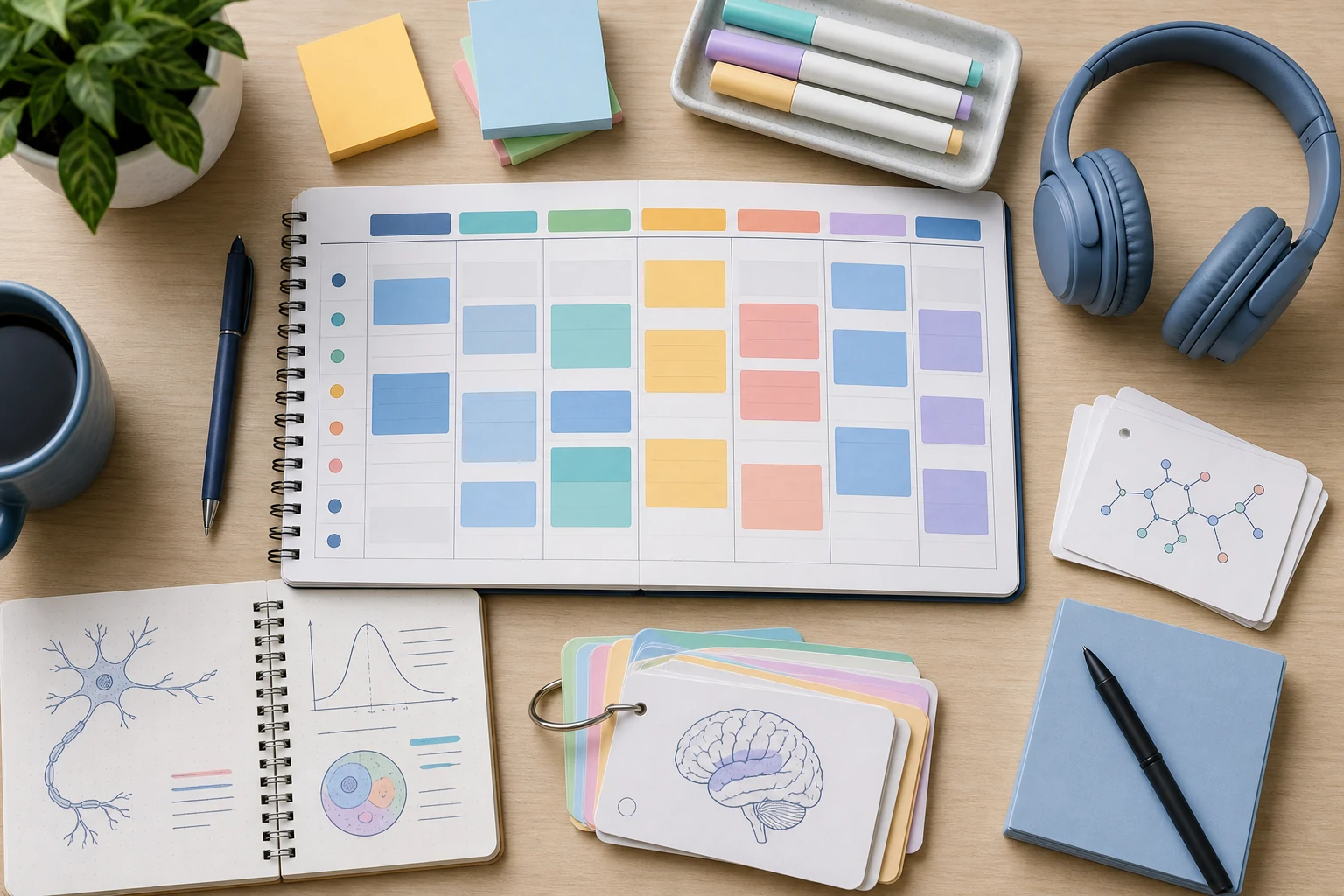
Day 1: Build the map. Skim the topic and create a one-page visual layout with headings, arrows, and key terms. Keep it rough. The goal is structure.
Day 2: Add voice. Explain the map aloud in three minutes. If you stumble, mark that spot and review only that part.
Day 3: Test both directions. Look at the map and speak the explanation. Then listen to your explanation and redraw the map from memory.
Day 4: Add practice. Solve questions, write examples, or apply the idea to a real problem. Learning gets stronger when preference turns into action.
Day 5: Reflect. Ask which method helped you understand, which helped you remember, and which helped you use the information. If you want a gentle starting point for that reflection, explore study strategy support and compare the result with your own week of evidence.
This approach respects the visual learner vs auditory learner question without trapping you inside it. Your preferred route can open the door, but practice and repeated retrieval help learning stick.
FAQ
What is the difference between visual and auditory learners?
Visual learners tend to prefer seeing information through diagrams, charts, written organization, images, and spatial layouts. Auditory learners tend to prefer hearing information through lectures, discussion, spoken summaries, recordings, and verbal explanation. Many people use both, and the best method can change by subject.
What are the 4 types of learners?
A common four-part model is VARK: visual, auditory, read/write, and kinesthetic. Visual focuses on seeing patterns, auditory on hearing ideas, read/write on words and lists, and kinesthetic on practice or movement. It is best used as a reflection framework, not a fixed ranking of ability.
What are the 4 types of students?
People often mean the same VARK categories when they ask about four types of students: visual, auditory, read/write, and kinesthetic. In real classrooms, students usually blend preferences, so teachers often support learning with diagrams, explanation, reading materials, and practice tasks.
Is visual learning better than auditory learning?
Neither is automatically better. Visual learning may be stronger for maps, diagrams, and comparisons. Auditory learning may be stronger for discussion, language, and sequential explanation. The better choice is the one that helps you understand, recall, and apply the specific material.
Are visual learners autistic?
Being a visual learner is not the same as being autistic. Many people, autistic and non-autistic, may prefer visual supports. If someone has broader concerns about development, communication, sensory needs, or school support, it is better to speak with a qualified professional or school specialist.
Can I be both a visual and auditory learner?
Yes. Many learners use a blend. You might prefer diagrams when planning, spoken explanation when clarifying, and practice questions when checking understanding. Blended strategies are often more useful than trying to choose one label forever.
How can I tell if I am a visual learner or auditory learner?
Notice what helps you explain an idea later. Try a diagram-based review and a spoken-summary review on the same topic, then test yourself without notes. If one method improves recall and application, use it more often while still keeping other strategies available.