What Is Tactile Learning? Definition, Examples, and Study Tips
Tactile learning is a hands-on way of learning that uses touch, texture, and physical interaction with materials to make ideas easier to understand. A tactile learner may remember a concept better after building it, tracing it, sorting it, writing it, modeling it, or using objects to represent it. If you are comparing learning preferences, a learning style quiz can be a useful self-reflection starting point, as long as you treat the result as flexible guidance rather than a fixed label.
This guide explains what is tactile learning, how it differs from kinesthetic learning, what tactile learner characteristics often look like, and how to use tactile learning activities in school, home study, tutoring, or adult learning.
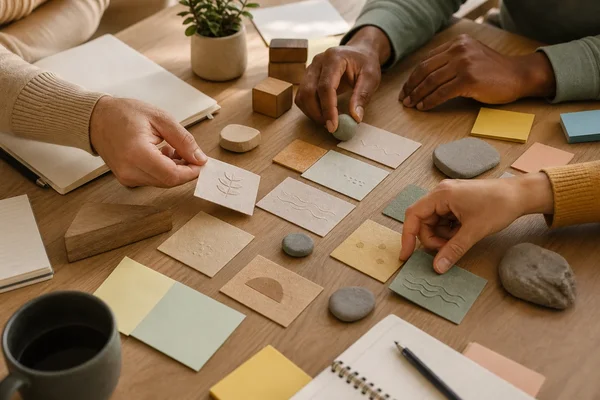
What Is Tactile Learning?
Tactile learning means learning through the sense of touch and the active handling of materials. Instead of only listening to an explanation or looking at a diagram, the learner does something physical with the information. They might use letter tiles to practice spelling, fraction pieces to compare parts of a whole, clay to model a cell, or index cards to rearrange the steps in a process.
The definition of tactile learning style is not "a person can only learn by touching things." A better definition is this: tactile learning is a preference or strategy in which physical contact with learning materials helps a learner pay attention, organize ideas, and remember information. Most people use a blend of visual, auditory, reading, writing, tactile, and kinesthetic methods. A tactile preference simply means touch-based strategies may feel especially helpful.
In psychology and education, tactile learning is often discussed as part of multisensory learning. Touch can make an idea more concrete. For example, a student who struggles to understand place value from a worksheet may grasp it faster when they can trade ten single blocks for one ten-rod. The object gives the learner something to inspect, move, compare, and explain.
Tactile Learning Examples Across Subjects
A clear tactile learning example is using textured letters while learning letter sounds. The learner traces each letter with a finger while saying the sound aloud. Touch, movement, sight, and sound work together, so the symbol is not just seen on a page; it is felt and practiced.
In math, tactile learning examples include counting beads, fraction circles, base-ten blocks, geometric solids, measuring tools, or paper folding. In science, learners might sort rocks by texture, build a model of an atom, handle magnets, grow plants, or create a simple circuit. In language arts, they might map a story with movable cards, build vocabulary with word tiles, or annotate a printed passage with colored tabs.
A tactile learning movie lesson can also work if the screen is not the whole activity. After watching a short clip, learners can build a timeline, sort evidence cards, handle related objects, sketch a scene, or create a model. The goal is to turn passive watching into physical processing.
For adults, tactile learning can look like drawing a process map on paper, testing a workflow with physical notes, building a prototype, using flashcards, or practicing a skill with real tools.
Tactile Learner vs Kinesthetic Learner
People often use tactile and kinesthetic as if they mean the same thing. They overlap, but they are not identical.
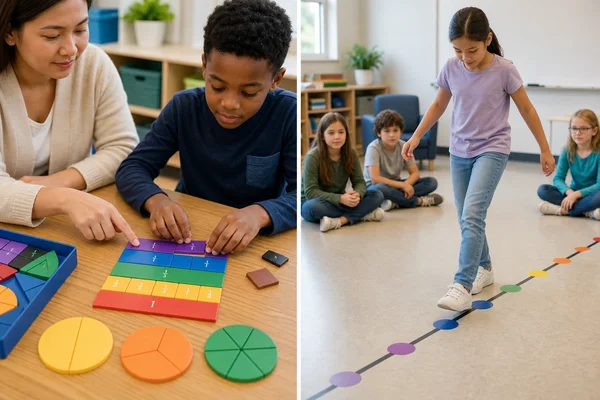
Tactile learning focuses on touch and manipulation. The learner benefits from handling objects, feeling textures, tracing shapes, building models, writing notes, or using tools. Kinesthetic learning focuses more broadly on body movement. A kinesthetic learner may benefit from walking while reviewing, acting out a scene, using gestures, standing during study, or moving through stations in a classroom.
The difference between tactile and kinesthetic learning is easiest to see in a lesson. If a student learns fractions by touching fraction tiles, comparing pieces, and rearranging them on a desk, that is strongly tactile. If the student learns fractions by stepping along a number line taped to the floor, that is more kinesthetic. If they use both the tiles and the floor number line, the activity is tactile-kinesthetic.
Neither preference is better. Both can support learning when the activity matches the goal. The important question is not "What type am I forever?" but "Which strategy helps me understand this specific task today?"
Common Tactile Learner Characteristics
Tactile learner characteristics are patterns, not proof that someone has one permanent learning type. A tactile learner may prefer to write notes by hand, underline printed pages, use flashcards, build examples, doodle diagrams, or touch materials while thinking. They may say, "I understand it when I try it," or "I need to make something with it."
Some tactile learners become restless during long lectures or purely screen-based lessons. Adding a small action, such as sketching, sorting cards, using a worksheet, or handling a model, can make the lesson easier to follow.
It is also important not to overread these signs. Fidgeting, movement, or trouble sitting still can have many causes, including boredom, stress, unclear instructions, lack of sleep, or attention-related concerns. A learning preference is not the same as ADHD or any clinical label. If attention, behavior, or learning difficulties seriously interfere with daily school or work, it is wise to seek support from a qualified professional.
Tactile Learning Activities That Actually Support Learning
Good tactile learning activities connect touch to the learning target. They are not just busy hands. Before choosing an activity, ask: What idea should the learner understand better because they touched, moved, built, or arranged something?
For reading and writing, try tracing letters, building words with tiles, sorting sentence strips, making story sequence cards, or using sticky notes to group evidence. For vocabulary, learners can match terms to objects, draw physical concept maps, or create flashcards they sort into "know," "almost," and "review" piles.
For math, use counters, fraction pieces, base-ten blocks, measuring cups, rulers, coins, folded paper, or geometric shapes. Let the learner explain what each object represents. The explanation matters because it turns the activity from play into reasoning.
For science, use models, experiments, samples, lab tools, sorting trays, and cause-and-effect demonstrations. A learner studying the water cycle might move labeled cards through evaporation, condensation, and precipitation. A learner studying electricity might build a simple circuit and then draw what each part does.
For online learning, pair a video or reading assignment with a hands-on task, such as building a paper model, arranging notes, sketching a process, or creating a physical checklist.
Tactile Learning Materials You Can Use
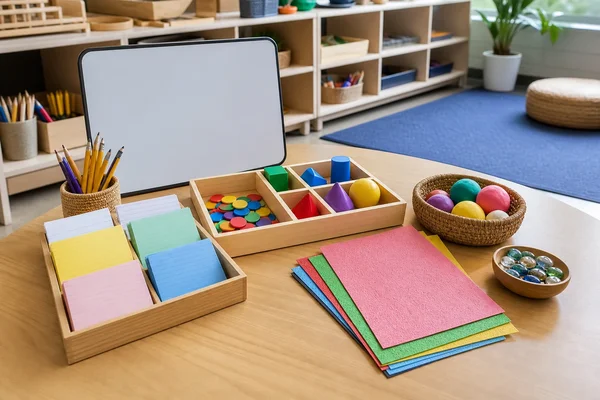
Tactile learning materials can be simple. You can use index cards, sticky notes, beads, paper clips, string, clay, blocks, coins, rulers, measuring cups, textured paper, highlighters, notebooks, whiteboards, or printable cutouts. For older learners, materials may include lab equipment, prototypes, mechanical parts, design tools, printed case cards, or real workplace objects.
Choose materials that make the concept clearer. If the object adds clutter, simplify it. A table full of colorful tools may look engaging, but too many choices can distract from the lesson. Start with one or two materials, then add more only if they help the learner compare, test, or explain the idea.
Safety and accessibility matter too. Materials should be age-appropriate, easy to clean, and suitable for the learner's sensory comfort. Some people enjoy texture; others may dislike certain materials. Offer choices when possible, such as paper tiles instead of clay, a stylus instead of finger tracing, or digital manipulatives paired with handwritten notes.
What Helps Tactile Learners Learn?
Tactile learners often benefit from a study routine that includes short input, active handling, and quick reflection. For example: read one short section, build or mark up the idea, explain it aloud, then write a one-sentence takeaway. This structure helps the learner connect the object or action back to meaning.
Try these practical supports:
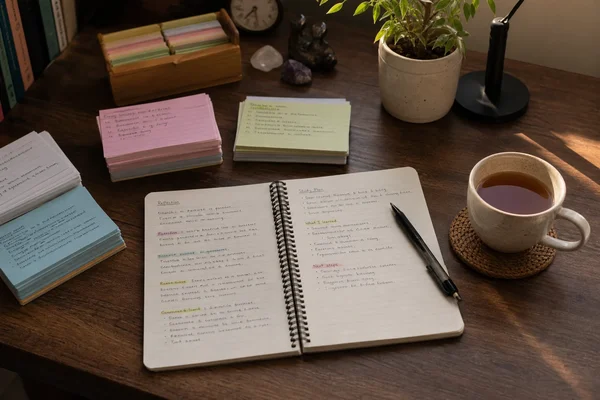
- Turn notes into cards that can be sorted, grouped, and rearranged.
- Use diagrams, labels, and arrows while writing by hand.
- Build examples before answering abstract questions.
- Add short movement breaks between focused study blocks.
- Practice with real or realistic materials when learning a process.
- Ask the learner to explain what each object, gesture, or model represents.
The last point is especially important. Tactile learning works best when the learner can describe the connection between the material and the concept. "I used these three counters because the equation has three equal groups" is stronger than simply moving counters around.
If you are unsure whether tactile strategies fit your study habits, a learning preference check-in can help you notice patterns. Use the result as a prompt for experimentation, then compare how well different strategies work across subjects.
How to Use Tactile Learning Without Turning It Into a Fixed Label
The most helpful way to use tactile learning is as a flexible clue. If touch-based study helps you understand a topic, use it. If another method works better for a different topic, use that too. A tactile learning style should not limit a learner to one method or excuse weak instruction. It should expand the set of strategies available.
For teachers and parents, this means offering tactile options without labeling a student as "only tactile." A learner might need objects for math, discussion for literature, diagrams for science, and quiet reading for history. Good support gives learners multiple paths into the same idea.
For students and adult learners, keep a small study log. After a session, write down what you used, what felt easier, and what you still need to review. Over time, you may notice that tactile activities help most when concepts are abstract, sequential, spatial, or skill-based.
You can also explore a study style reflection tool when you want a broader view of your learning preferences. Treat it as a planning aid, then test the suggestions in real study sessions. The real value is not the label; it is the next small adjustment that makes learning clearer.
FAQ
What is an example of tactile learning?
An example of tactile learning is using fraction tiles to compare one-half, one-third, and one-fourth. The learner can touch the pieces, place them side by side, combine them, and explain why some pieces are larger or smaller. Other examples include tracing letters, building a model, sorting cards, using clay, or handling science materials.
What is the difference between tactile and kinesthetic learning?
Tactile learning emphasizes touch and manipulating materials with the hands. Kinesthetic learning emphasizes larger body movement, such as walking, acting, gesturing, or moving through stations. Many activities use both. Building a model is tactile; acting out a process is kinesthetic; building and then presenting the model with movement is tactile-kinesthetic.
What is a tactile learner?
A tactile learner is someone who often understands or remembers information better when they can touch, build, write, arrange, or physically practice it. This is a learning preference, not a fixed identity. Most learners use several methods depending on the subject, task, mood, and learning environment.
Is a kinesthetic learner ADHD?
No. A kinesthetic or tactile learning preference is not the same as ADHD. Some learners prefer movement or hands-on work because it helps them stay engaged, but attention challenges can have many causes. If focus, behavior, or school performance becomes a persistent concern, a qualified professional can provide appropriate guidance.
What helps tactile learners learn?
Tactile learners often benefit from manipulatives, handwritten notes, models, flashcards, lab activities, sorting tasks, textured materials, and opportunities to explain what they are doing. The activity should connect directly to the learning goal, not simply keep the learner busy.
What is tactile learning in the classroom?
In the classroom, tactile learning means using touch-based materials and hands-on tasks to support understanding. Teachers might use counters for math, word tiles for spelling, models for science, map puzzles for geography, or timeline cards for history. The strongest classroom activities combine handling materials with discussion, reflection, and clear learning goals.