Create a VAK-Friendly Classroom: Your Differentiated Instruction & Learning Style Quiz Guide
Are you looking for ways to transform your classroom into a dynamic environment where every student thrives? As an educator, you know that a one-size-fits-all approach often leaves some students behind. The key to unlocking each student's potential lies in understanding their unique learning preferences. This guide gives you actionable differentiated instruction strategies to help build a VAK-friendly classroom that caters to all learners. So, what's the best way to start? An effective first step is to use a learning style quiz to discover their styles.
VAK in the Classroom: Understanding Learning Style Principles
Before diving into specific techniques, it’s crucial to grasp the foundational concepts of the Visual, Auditory, and Kinesthetic (VAK) model. This framework isn't about labeling students but about understanding their natural tendencies for processing information. Embracing these principles allows you to create more flexible and effective lesson plans that resonate with a wider range of students, boosting both engagement and retention.
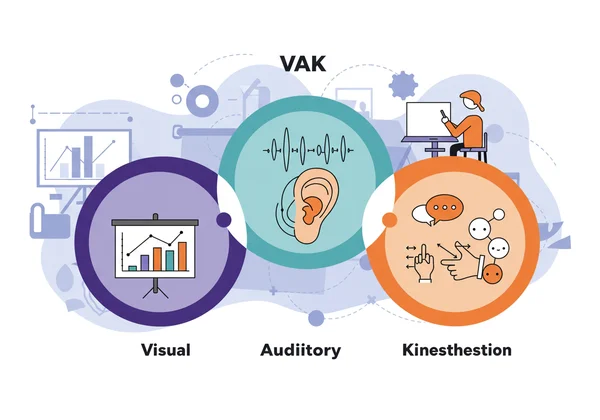
Deciphering Visual, Auditory, and Kinesthetic Learners
Understanding the characteristics of each learning style is the cornerstone of a VAK-friendly approach. While most people have a mix of styles, one is often dominant. Identifying these preferences can revolutionize your teaching methods.
- Visual Learners absorb information best through sight. They benefit from charts, graphs, diagrams, and written instructions. They often remember faces but forget names and prefer to take detailed notes to absorb information.
- Auditory Learners process information most effectively by hearing. They thrive in lectures, group discussions, and Socratic seminars. These students often remember what is said over what is seen and may repeat instructions aloud to better understand them.
- Kinesthetic Learners learn by doing, touching, and moving. They need hands-on experiences and physical activity to stay engaged. They excel in experiments, role-playing, and projects where they can build or create something tangible.
Why Differentiate? The Power of Tailored Teaching Methods
Differentiated instruction is not about creating a separate lesson plan for every student. Instead, it’s about offering flexible pathways to learning. By tailoring your teaching methods to accommodate VAK preferences, you create an inclusive environment where every student has an equal opportunity to succeed. By adopting this approach, you'll see a remarkable increase in student engagement, fewer classroom management challenges, and a truly profound understanding of the material. When your students can learn in a way that feels natural, their confidence and academic performance will soar.
Differentiated Instruction Strategies for Diverse Learning Styles
Once you understand the VAK principles, the next step is to implement practical strategies that cater to these diverse needs. The goal is to weave a variety of techniques into your daily lessons so that every learner feels seen, heard, and actively involved. This is where you can truly begin to see the impact of tailoring your instructional methods.

Engaging Visual Learners: Techniques for Clarity and Comprehension
To capture the attention of your visual learners, make information visible and organized. Use color-coding to highlight key concepts on the whiteboard or in handouts. Incorporate mind maps, flowcharts, and diagrams to illustrate complex processes. Videos, presentations with rich imagery, and written outlines can transform a lecture into an engaging visual experience. Encourage these students to use highlighters, draw symbols in their notes, and create flashcards to reinforce learning.
Boosting Auditory Engagement: Strategies for Listening and Discussion
Auditory learners thrive on sound and speech. Foster a classroom environment rich with opportunities for discussion, debates, and peer-to-peer teaching. Use mnemonic devices, rhymes, and jingles to help them remember facts. Read important passages aloud with expressive intonation. Incorporate podcasts or audiobooks related to the subject matter. When giving instructions, say them clearly and ask an auditory learner to repeat them back to ensure comprehension for the whole class. A quick learning style quiz can help you identify which students might benefit most from these methods.
Activating Kinesthetic Learners: Hands-On and Movement-Based Approaches
Kinesthetic learners need to move to learn. Break up long periods of sitting with "brain breaks" that involve stretching or movement. Use interactive models, conduct science experiments, and facilitate role-playing activities. Turn vocabulary reviews into games like charades or Pictionary. Allow students to use manipulatives in math or build dioramas for history projects. Even simple actions, like allowing a student to pace at the back of the room while reading, can make a significant difference in their ability to focus and learn.
Practical Classroom Activities for VAK-Friendly Learning
Theory is essential, but concrete examples bring it to life. Here are specific activities you can integrate into your lesson plans to create a truly VAK-friendly learning environment. The key is variety and flexibility, ensuring that over the course of a unit, every learning style gets a chance to shine. Discovering your students' dominant styles with a free VAK learning style quiz can help you prioritize which activities to try first.
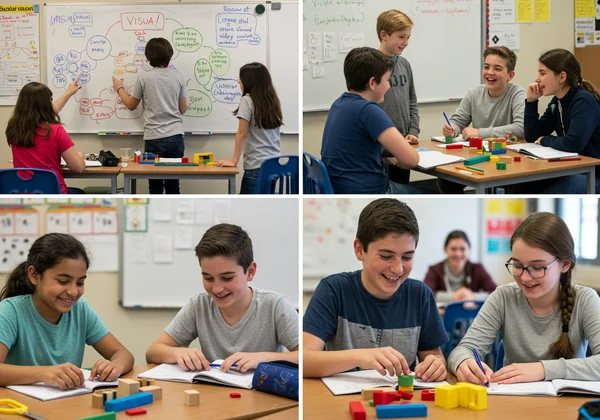
Visual Aids, Graphic Organizers, and Multimedia Integration
For your next lesson, try incorporating a gallery walk where students analyze images or posters. Use graphic organizers like Venn diagrams or K-W-L charts to structure information. Show a short documentary clip to introduce a new topic. Encourage students to create infographics or storyboards to demonstrate their understanding. These tools are not just for visual learners; they provide a clear structure that benefits everyone in the classroom.
Interactive Discussions, Debates, and Storytelling
Instead of a standard lecture, structure your lesson as a "think-pair-share" activity where students discuss a concept with a partner before sharing with the class. Host a formal debate on a controversial topic in history or science. Use storytelling to explain historical events or complex scientific theories in a memorable way. These auditory-focused activities build critical thinking, communication skills, and a strong classroom community.
Role-Playing, Experiments, and Movement-Based Tasks
Bring learning to life with hands-on tasks. Have students role-play a scene from a novel or a significant historical event. In science, prioritize lab experiments where students can directly observe cause and effect. For math, use body movements to teach angles or have students create a "human graph." These kinesthetic activities anchor abstract concepts in physical experience, making them unforgettable. To better plan these activities, find learning styles of your students.
Assessing and Adapting: Maximizing VAK-Friendly Teaching
Implementing VAK strategies is not a one-time event; it's an ongoing cycle of assessment, reflection, and adaptation. To truly maximize the benefits, you must continuously observe what works and be willing to adjust your approach based on your students' responses. A flexible mindset is your greatest asset in creating a classroom that evolves with your students' needs.
Formative Assessment for Diverse Learning Styles
Move beyond traditional paper-and-pencil quizzes. Assess student understanding through a variety of formative methods. For visual learners, ask them to draw a diagram explaining a concept. For auditory learners, have them explain it to a partner. For kinesthetic learners, ask them to build a model or act it out. Using diverse assessment tools, including a formative learning style quiz, gives you a more holistic view of student progress.
Creating a Flexible and Inclusive Learning Environment
An inclusive classroom is one where students feel safe to learn in their own way. Arrange your classroom with flexible seating options, such as standing desks, floor cushions, or traditional desks. Create quiet zones for focused work and collaborative areas for group projects. Celebrate all types of contributions, whether it's a well-drawn diagram, an insightful question, or a creative solution to a hands-on problem. This environment empowers students to take ownership of their education.
Empower Your Teaching: Building a Truly VAK-Friendly Classroom
Creating a VAK-friendly classroom is one of the most powerful ways you can practice differentiated instruction. By understanding and catering to Visual, Auditory, and Kinesthetic learners, you build an inclusive, engaging, and effective learning environment for every student. Remember, this is a journey of discovery for both you and your students. Stay patient, be observant, and celebrate every small victory along the way.
Are you ready to take that first step toward a more dynamic and differentiated classroom? Understanding your students' unique learning profiles is the perfect place to start.
Discover Your Students' Unique Learning Styles – Take Our Free Quiz Today!

Frequently Asked Questions About VAK-Friendly Classrooms
How do I identify my students' learning styles effectively?
Observing student behavior is a great start. Notice who doodles, who likes to talk through ideas, and who is always fidgeting. However, for a more structured insight, using a tool designed for this purpose is incredibly helpful. A well-designed VAK learning style quiz can provide a clear and actionable profile for each student, serving as an excellent starting point. A great option is our VAK learning test to kickstart your differentiation journey.
Is one learning style inherently better than others for academic success?
Absolutely not. Each learning style—Visual, Auditory, and Kinesthetic—is simply a different way of processing information. No single style is superior. A truly effective learner is often one who can adapt and use strategies from all three styles. The goal of a VAK-friendly classroom is to honor students' primary style while helping them strengthen their skills in other areas.
Can differentiated instruction really improve classroom engagement for all students?
Yes, overwhelmingly so. When students are taught in a way that aligns with their natural learning preferences, they feel understood and are more likely to participate actively. Differentiated instruction reduces frustration and boredom, which are major causes of disengagement. By offering multiple pathways to learning, you ensure that every student can connect with the material and feel successful.
How can I implement VAK strategies with limited classroom resources?
You don't need a big budget to create a VAK-friendly environment. Many effective strategies are free. For visual learners, use the whiteboard creatively. For auditory learners, prioritize group discussions. For kinesthetic learners, incorporate movement-based games or have students use their bodies to represent concepts. The most valuable resource is your creativity and willingness to adapt your teaching methods. A great start is having students complete a learning style quiz on a shared device or at home.